

Python vs JavaScript vs Go: Which Programming Language to Learn in 2026?
A junior developer asked me last week: “I have six months to go all-in on one language — which one actually gets me hired?” It’s the right question, and it’s one that thousands of freshers, career-switchers, and working developers are wrestling with right now. The stakes are real: the average salary gap between a developer who picked the wrong stack and one who picked the right one can be ₹4–8 LPA in India alone. Globally, the best programming language 2026 decision is no longer just about syntax preference — it’s about where AI tooling is heading, which cloud platforms are scaling, and which skill sets companies are actually willing to pay for. This post cuts through the noise and gives you a clear, data-backed answer.
- Python dominates AI/ML and data science — still the safest bet for high-paying tech roles in 2026.
- JavaScript (especially with Node.js and React) owns the web and remains the most in-demand language by raw job volume.
- Go is surging in backend infrastructure, cloud-native, and fintech — best for developers who want a niche edge and top-tier salaries.
- Java and Rust are niche but powerful — Java for enterprise, Rust for systems work where performance is non-negotiable.
- Your goal defines your language — there’s no universally “best” pick, but this guide maps each language to the right career path.
Core Concept: Why Language Choice Is a Career Strategy, Not a Tech Opinion
Most “best programming language” debates are really disguised taste wars. Python people love readability. JavaScript developers point to ubiquity. Go advocates talk about performance. None of them are wrong — they’re just answering different questions.
In 2026, the question isn’t “which language is best” — it’s “which language aligns with where the industry is allocating budget.” And the data is unambiguous:
- According to the Stack Overflow Developer Survey 2025, Python holds the #1 spot as the most-used language for the fifth consecutive year among professional developers working in data and AI.
- JavaScript remains the most used language overall for the 13th year running — over 62% of developers use it in some capacity.
- Go saw a 31% increase in job postings on LinkedIn India between 2024 and early 2026, driven almost entirely by cloud infrastructure and backend microservices hiring.
Here’s an EdTech lens on this: platforms like Coursera, upGrad, and Great Learning have all seen a spike in enrollment for Python and Go courses specifically — not because of trend-chasing, but because their corporate partners are requesting those skills directly for placement pipelines. When a company funds a seat in a course, they’re telling you exactly what they want to hire.
The language you learn first shapes your mental model of programming. Python teaches you to think in data. JavaScript teaches you to think in events and async flows. Go teaches you to think in concurrency and simplicity. Each of those mental models has a job market waiting for it.
Actionable Framework: How to Pick the Right Language for Your Goal in 2026
Stop asking “which language is popular” and start asking “what do I want to build, and who is paying for it.” Here’s a structured six-step framework:
- Define your end goal clearly. Are you targeting a web developer role, a data/AI role, a backend systems role, or a DevOps/cloud-native role? Write it down. Vague goals produce vague outcomes.
- Match goal to language family. Web → JavaScript (plus TypeScript for scale). Data/AI → Python. Backend infrastructure/cloud → Go or Rust. Enterprise systems → Java. Low-level embedded → C/C++ or Rust.
- Audit the job market in your target geography. Search LinkedIn for your target role + city. Filter by “posted in last 30 days.” Count which languages appear in the top 20 job descriptions. That’s your real-world signal — not a blog post’s opinion.
- Learn the language’s ecosystem, not just its syntax. Python without NumPy, Pandas, and PyTorch is a toy. JavaScript without React or Node.js is incomplete. Go without understanding goroutines and the standard library is surface-level. Budget 60% of your learning time on the ecosystem.
- Build three portfolio projects that mirror real job tasks. For Python: a data pipeline + an ML model deployment. For JavaScript: a full-stack app with an API. For Go: a REST API with concurrent processing. Generic “todo apps” don’t move the needle.
- Time-box your commitment and evaluate. Give it a genuine six months. After month three, you should have one project live. After month six, you should have applied to at least 20 jobs. If you’re not getting callbacks, the issue is probably your portfolio quality or resume — not the language.
Use Cases: Which Language Fits Which EdTech and Tech Context
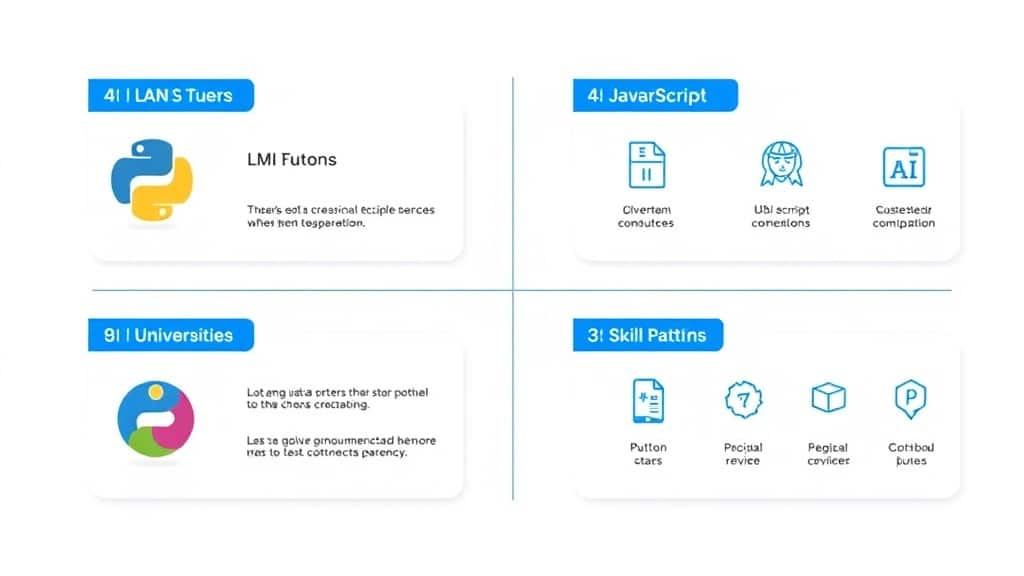
LMS Platforms (Canvas, Moodle, custom builds): JavaScript is king here. The frontend is React or Vue, the backend is Node.js or Python/Django, and the APIs are REST or GraphQL. If you want to build or work with learning management systems, JavaScript + Python is your combo. Python handles the analytics layer; JavaScript handles everything users interact with.
AI Tutors and Adaptive Learning Engines: Python, full stop. Every major AI tutoring system — whether it’s a Khanmigo-style assistant or a custom adaptive quiz engine — runs on Python. LangChain, LlamaIndex, OpenAI’s API, Hugging Face — they’re all Python-first. A developer building AI tutors in 2026 who doesn’t know Python is at a severe structural disadvantage.
Universities and Computer Science Programs: Most CS programs in India (IITs, NITs, tier-2 colleges) now teach Python as the first language, displacing C in many curricula. Java remains for data structures courses and Android-adjacent coursework. Go is beginning to appear in advanced electives on distributed systems. If you’re a fresher, Python is likely already your foundation — go deeper on it rather than pivoting immediately.
Skill-Based Hiring Platforms (Unstop, HackerEarth, iMocha): These platforms assess language-agnostic algorithmic thinking, but their client companies — the ones posting the actual jobs — skew heavily toward Python for data roles and JavaScript for product roles. Go is appearing on assessments for companies like Zepto, Juspay, and CRED that run high-throughput backend systems. If you’re targeting these platforms’ leaderboards, optimize for the language used by the companies you want to impress.
Language Comparison: Python vs JavaScript vs Go vs Java vs Rust
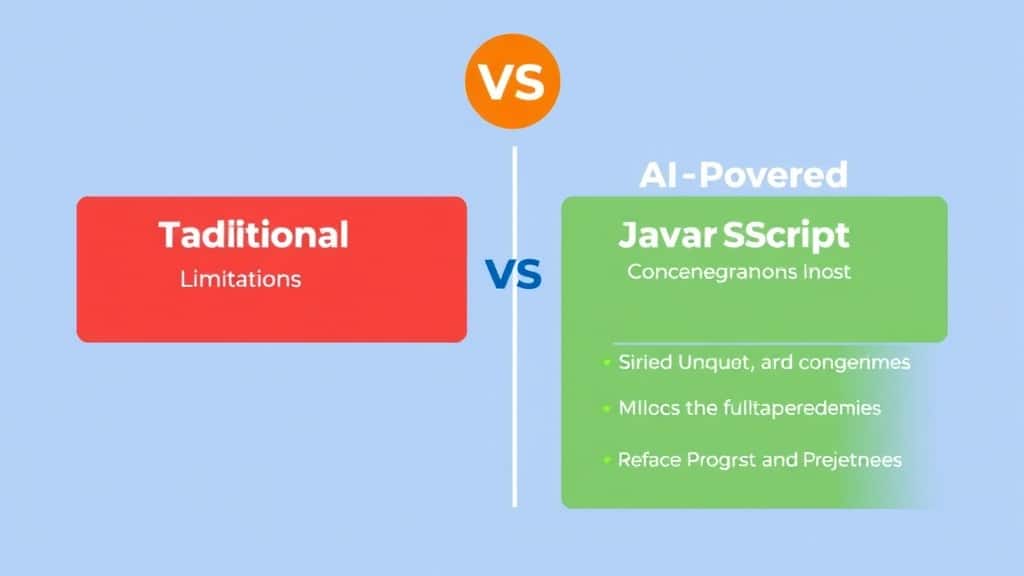
| Language | Primary Use Cases | Job Demand (India 2026) | Avg Salary (India, 3 yrs exp) | Learning Curve | AI/ML Support | Best For |
|---|---|---|---|---|---|---|
| Python | AI/ML, data science, scripting, backend APIs | Very High | ₹10–18 LPA | Low (beginner-friendly) | Excellent (native ecosystem) | AI engineers, data scientists, ML roles |
| JavaScript | Web dev (frontend + backend), mobile (React Native) | Highest (raw volume) | ₹8–16 LPA | Medium (async complexity) | Moderate (via APIs) | Full-stack developers, frontend specialists |
| Go (Golang) | Backend microservices, cloud-native, DevOps tooling | High (fast-growing) | ₹14–24 LPA | Medium (simple syntax, new paradigm) | Low (not primary AI language) | Backend engineers, fintech, cloud infra |
| Java | Enterprise apps, Android, Spring Boot backends | High (stable) | ₹9–17 LPA | High (verbose, OOP-heavy) | Low | Enterprise backend, Android developers |
| Rust | Systems programming, WebAssembly, embedded | Low-Medium (niche) | ₹16–28 LPA | Very High (steep) | Low | Systems engineers, performance-critical roles |
Career Path Flowchart:
START
  ↓
[Define goal: web / data+AI / systems / cloud]
  ↓              ↓                   ↓
[Web]        [Data/AI]        [Systems/Cloud]
  ↓              ↓                   ↓
[JavaScript] [Python]         [Go or Rust]
  ↓              ↓                   ↓
[Learn fundamentals + ecosystem]
  ↓
[Build 3 real-world portfolio projects]
  ↓
[Apply to targeted roles, iterate on feedback]
  ↓
END: Land your first/next job in the right stack
Key Insights:
- Python’s AI moat is widening, not narrowing. Every major LLM framework, ML library, and AI agent toolkit ships Python-first. This won’t change in the next five years.
- JavaScript is the safest “floor” for employment. Even if you specialize later, knowing JavaScript means you can always find work. It’s the most versatile hedge in the market.
- Go salaries punch above the demand curve. Fewer developers know Go deeply, but companies that need it pay a significant premium — often 20–30% more than equivalent Java or Python backend roles.
- Java is not dying — it’s consolidating. Large enterprises (banks, insurance, government IT) aren’t migrating away from Java. It’s a stable, high-floor option, just not a growth bet.
- Rust is the highest-ceiling, highest-risk bet. If you can master it, the pay is exceptional — but the job market is thin and the ramp-up time is brutal. Don’t start here.
- TypeScript is eating JavaScript’s lunch for serious projects. If you learn JavaScript in 2026, plan to add TypeScript within three months. Most serious codebases have already migrated.
Case Study: How a Bootcamp Redesigned Its Curriculum Around Go — and What Happened
The Setup: A mid-tier Bangalore-based coding bootcamp — 120 students per cohort, 6-month program — had been running a Java + JavaScript curriculum since 2019. By Q3 2024, placement rates had slipped to 61%, and corporate partners were asking for Python and Go developers that the program wasn’t producing.
Before (2024 curriculum): Java (weeks 1–10), JavaScript/React (weeks 11–18), DSA in Java (weeks 19–22), final project (weeks 23–24). Placement rate: 61%. Average first-year CTC: ₹5.2 LPA. Time to first offer after graduation: 67 days.
The Change: The bootcamp partnered with three Bangalore-based product companies (fintech, healthtech, SaaS) to co-design a new curriculum. Python + FastAPI replaced Java weeks 1–10. Go was introduced in weeks 15–18 as a backend microservices module. DSA was taught in Python. The JavaScript/React module stayed but was compressed and moved earlier.
After (2025 cohort results): Placement rate: 84% within 90 days of graduation. Average first-year CTC: ₹7.8 LPA. Time to first offer: 41 days. Three students received Go-specific backend roles with CTCs above ₹12 LPA — roles that didn’t exist in the bootcamp’s placement network 18 months prior.
The lesson isn’t that Java is dead or that Go is magic. The lesson is that curriculum designed in collaboration with actual hiring companies — not based on what instructors prefer — produces dramatically better outcomes. The language choice followed the market, and the market rewarded it.
Common Mistakes Developers Make When Choosing a Programming Language
Mistake 1: Choosing by popularity polls instead of job market data
Why it hurts: Popularity surveys like TIOBE or Stack Overflow measure broad usage, not hiring demand in your specific target market. A language can be globally popular but thin on openings in your city or domain.
The fix: Search LinkedIn Jobs for your target role + location with a 30-day filter. Count language mentions in job descriptions. That’s your actual signal.
Mistake 2: Learning syntax without building anything real
Why it hurts: You can finish three Python courses on Udemy and still not be able to build a functioning API. Syntax knowledge without project experience is invisible to hiring managers — your resume says “Python” but your portfolio says nothing.
The fix: After every major concept, build something. A function → a script → a module → a project. No exceptions.
Mistake 3: Switching languages after 6–8 weeks because “it’s too hard”
Why it hurts: Every language feels uncomfortable at week six. The async model in JavaScript, the type system in Go, the list comprehensions in Python — all of them click eventually. Switching at week six means you never reach the click moment in anything.
The fix: Commit to a minimum of four months before evaluating a switch. Set a 90-day milestone: “I will have one working project deployed.” Judge based on that outcome, not on how the code feels.
Mistake 4: Ignoring the ecosystem and learning only the core language
Why it hurts: Nobody hires “Python developers” — they hire Django developers, FastAPI developers, PyTorch engineers, or data pipeline engineers who use Python. The language is the vehicle; the ecosystem is the destination.
The fix: Pick your ecosystem before you start. If you’re going Python for AI, your roadmap is: Python → NumPy/Pandas → Scikit-learn → one deep learning framework (PyTorch preferred). Plan the full stack, not just the language.
FAQ: Python vs JavaScript vs Go in 2026
Q1: Which programming language should I learn first in 2026 as a complete beginner?
Python is the strongest first choice for beginners in 2026. Its readable syntax reduces early friction, its job market is deep across AI and data roles, and its ecosystem is the most directly connected to where tech hiring is growing. If your goal is web development specifically, start with JavaScript instead — but for most other paths, Python wins.
Q2: Is Go worth learning in 2026 if I already know Python?
Yes — especially if you want backend or cloud infrastructure roles. Go’s concurrency model and performance profile make it the go-to language for high-throughput systems. Companies like Zepto, Juspay, and Razorpay actively hire Go developers, and salaries are notably higher than comparable Python backend roles. It pairs well with Python rather than replacing it.
Q3: Python vs JavaScript 2026 — which has better job prospects?
JavaScript has more raw job volume; Python has higher average salaries in tech-specific roles. If you want the safest bet for overall employment, JavaScript. If you’re targeting AI, data, or ML roles specifically, Python is irreplaceable. Many senior developers hold both — JavaScript for frontend/full-stack work and Python for data and automation.
Q4: What is the best programming language for freshers to get a high salary in 2026?
Python for AI/ML roles and Go for backend infrastructure offer the best salary-to-learning-time ratio for freshers willing to specialize. A fresher with strong Python skills + one solid ML project can command ₹8–12 LPA. A fresher with Go skills targeting fintech or cloud companies can land ₹10–15 LPA. Generalist JavaScript roles typically start lower but have more openings.
Q5: Is Java still worth learning in 2026, or should I skip it?
Java is absolutely still worth learning if your target is enterprise software, large Indian IT companies (TCS, Infosys, Wipro), or Android development. The job volume is massive and stable. It’s not a growth bet — it won’t open doors in AI or modern cloud-native work — but it’s a reliable foundation with a deep job market that isn’t going anywhere soon.
Conclusion: Your Language is Your Leverage — Choose It Like a Career Decision
There’s no single “best programming language 2026” — there’s only the best language for your specific goal, your target market, and the time you’re willing to invest. Python owns AI and data. JavaScript owns the web and raw job volume. Go owns the high-performance backend niche with salaries to match. Java is stable and enterprise-safe. Rust is the long game for systems specialists.
The framework is simple: define your goal first, audit your local job market second, commit to a language-plus-ecosystem for a minimum of six months, and build projects that mirror actual job requirements. Stop switching, stop debating, start building.
If you’re unsure where to start or want a structured path that maps directly to placement outcomes, GrowAI’s programs are designed exactly for this — curriculum built with hiring companies, not just instructors.
Book a Free Demo at GrowAI
Free 2026 Career Roadmap PDF
The exact SQL + Python + Power BI path our students use to land Rs. 8-15 LPA data roles. Free download.
Ready to start your career in data?
Book a free 1-on-1 counselling session with GrowAI. Personalised roadmap, zero pressure.

