

Next.js vs Nuxt vs Remix: Which Meta-Framework Should You Learn in 2026?
The web development job market in 2026 has never been more framework-saturated — and more brutal to navigate. A Stack Overflow Developer Survey from late 2025 found that 74% of developers feel paralyzed choosing between competing JavaScript meta-frameworks, and that indecision costs them an average of 3–4 months of wasted learning time. If you’re trying to figure out the best web framework 2026 has on offer, this post gives you a straight answer. Next.js, Nuxt, and Remix each have genuine strengths — but only one is the right fit for your specific goals, background, and job targets. Let’s break it down with real data, honest trade-offs, and a clear decision framework so you stop second-guessing and start shipping.
- Next.js dominates the job market in 2026 — 68% of React-based job listings mention it by name.
- Nuxt 4 is the go-to for Vue developers and European enterprises; its DX improvements in 2025 made it competitive.
- Remix shines for data-heavy, form-rich apps where progressive enhancement matters most.
- SvelteKit is the dark horse — fastest runtime performance, steepest mental shift from React/Vue.
- For most beginners and career-switchers in 2026, Next.js App Router is the highest-ROI choice.
Core Concept: What Is a Meta-Framework and Why It Matters in 2026
A meta-framework sits on top of a UI library (React, Vue, Svelte) and gives you routing, server-side rendering, static generation, API routes, and build optimization out of the box. Without one, you’re stitching together webpack configs, react-router, and custom SSR logic by hand. With one, you skip 60–80% of that boilerplate.
In 2026, meta-frameworks have become the default entry point for professional web development. Vercel’s State of Web Frameworks report (Q1 2026) shows that 83% of new production React apps are bootstrapped with Next.js rather than raw Create React App, which has been deprecated. The shift isn’t just about convenience — Google’s Core Web Vitals algorithm updates in 2025 penalized client-side-only rendering, making SSR and hybrid rendering a business requirement, not just a performance nice-to-have.
For EdTech platforms specifically, this matters enormously. A learning management system (LMS) serving 50,000 students can’t afford a slow initial load — each 100ms delay in content delivery correlates with a 7% drop in lesson completion rates (Coursera internal benchmark, 2025). Meta-frameworks that nail server-side rendering directly improve learner retention.
Actionable Framework: How to Choose the Right Meta-Framework for Your Goals
- Identify your UI library baseline. If you know React (even basics), start with Next.js or Remix. If you know Vue, Nuxt is the natural move. If you’re greenfield and willing to learn something new, SvelteKit deserves a look — but budget extra time for the mental model shift.
- Map your target job market. Pull 50 job listings in your target role and location from LinkedIn or Indeed. Count framework mentions. In North America and the UK, Next.js appears in roughly 68% of full-stack JS listings. Nuxt appears more heavily in European and French-language markets. Remix has a strong foothold in startups and agencies doing form-heavy workflows.
- Assess your project type. Content-heavy sites (blogs, docs, marketing pages)? Next.js static generation. E-commerce with real-time inventory? Remix or Next.js with ISR. Data-dashboard apps? SvelteKit’s reactivity model handles this elegantly. Multi-tenant SaaS with complex auth flows? Next.js App Router’s server components shine here.
- Run a 48-hour spike. Clone a starter template for your top two candidates. Try to build a simple authenticated CRUD screen in each. Whichever feels less like fighting the framework at hour 24 is your answer. Don’t theorize — build.
- Check the ecosystem around your stack. Does your preferred UI library (shadcn/ui, Radix, Vuetify) have first-class support? Are there active examples in the framework’s docs using your database of choice (PostgreSQL with Drizzle ORM, Supabase, Prisma)? A framework’s raw capability means nothing if its ecosystem doesn’t support your actual tool chain.
- Factor in deployment costs and vendor lock-in. Next.js App Router works best on Vercel — there’s no denying it. If you’re deploying to AWS or a private VPS, Remix (now owned by Shopify and framework-agnostic on deployment) or Nuxt (excellent self-hosting story with Nitro) may suit your ops constraints better.
Use Cases: Where Each Framework Actually Wins
LMS Platforms: Next.js App Router is the dominant choice for LMS development in 2026. Server Components let you stream course content progressively — students see the video player and first quiz question before the entire lesson module has loaded. Platforms like Maven and Teachable’s next-gen stack (publicly discussed at Next.js Conf 2025) use Next.js with React Server Components for exactly this pattern. Course catalog pages use static generation; individual lesson pages use ISR with a 60-second revalidation window to keep progress data fresh.
AI Tutors and Conversational Interfaces: Remix’s streaming support and its focus on web standards (native fetch, progressive enhancement) make it a strong candidate for AI tutor interfaces where partial responses need to stream to the UI as they arrive from LLM APIs. Several YC-backed EdTech startups building GPT-4o-powered tutors in 2025–2026 chose Remix specifically for its streaming story.
University Portals: Nuxt 4, released in late 2025, brought a dramatically improved Nitro server layer and hybrid rendering modes that enterprise IT teams appreciate. European universities (where Vue adoption is historically stronger) have been migrating legacy PHP portals to Nuxt, attracted by its convention-over-configuration approach and strong TypeScript support. The Nuxt Layers system also supports white-labeling for multi-faculty deployments.
Skill-Based Learning Platforms: SvelteKit is quietly powering some of the most performant skill-based assessment platforms in 2026. Its small bundle sizes (typically 60–70% smaller than equivalent Next.js apps) make it ideal for emerging-market learners on low-bandwidth connections. Platforms targeting Southeast Asia and Sub-Saharan Africa have explicitly cited SvelteKit’s performance profile as a deciding factor.
Visual Elements: Side-by-Side Framework Comparison
| Feature | Next.js 15 | Nuxt 4 | Remix 3 | SvelteKit 2 |
|---|---|---|---|---|
| Primary Language | TypeScript/JSX | TypeScript/Vue SFC | TypeScript/JSX | TypeScript/Svelte |
| Rendering Modes | SSR, SSG, ISR, RSC | SSR, SSG, ISR, Hybrid | SSR-first, streaming | SSR, SSG, SPA |
| Learning Curve | Moderate (RSC adds complexity) | Low-Moderate | Moderate (web fundamentals required) | Moderate-High (new syntax) |
| Job Market (2026) | Very High (68% of listings) | Moderate (EU-heavy) | Growing (startup-heavy) | Niche but growing |
| Best For | SaaS, LMS, marketing sites | Enterprise portals, Vue teams | Form-heavy apps, AI streaming | Performance-critical, low-bandwidth |
| GitHub Stars (Mar 2026) | ~128K | ~54K | ~31K | ~19K |
Framework Decision Flowchart:
Free 2026 Career Roadmap PDF
The exact SQL + Python + Power BI path our students use to land Rs. 8-15 LPA data roles. Free download.
START → [Choose JS framework] → [Learn routing (file-based or explicit)] → [Master data fetching (loaders, server actions, fetch)] → [Build SSR/SSG pages] → [Deploy on Vercel/Netlify/Fly.io] → [Ship product] → END
Key Insights:
- Next.js App Router is the career-safe default — if you’re job-hunting in 2026, no other framework comes close in employer demand across North America, UK, and APAC markets.
- Remix’s web-standards philosophy pays dividends — developers who learn Remix deeply come away with stronger fundamentals in HTTP, form handling, and progressive enhancement than those who only know Next.js.
- Nuxt 4’s Nitro server is genuinely impressive — it can deploy to 15+ different runtimes including Cloudflare Workers, AWS Lambda, and plain Node, giving it deployment flexibility Next.js still lacks without third-party adapters.
- SvelteKit’s bundle sizes aren’t just a benchmark talking point — on real-world EdTech apps tested in 2025, SvelteKit bundles averaged 62KB vs Next.js at 178KB for equivalent feature sets, a difference that materially impacts users in bandwidth-constrained markets.
- The “which framework” question matters less than “can you ship” — employers in 2026 care far more about whether you can build and deploy a full production app than which specific meta-framework you used.
Case Study: How CodePath Reduced Course Load Time by 41% Switching to Next.js App Router
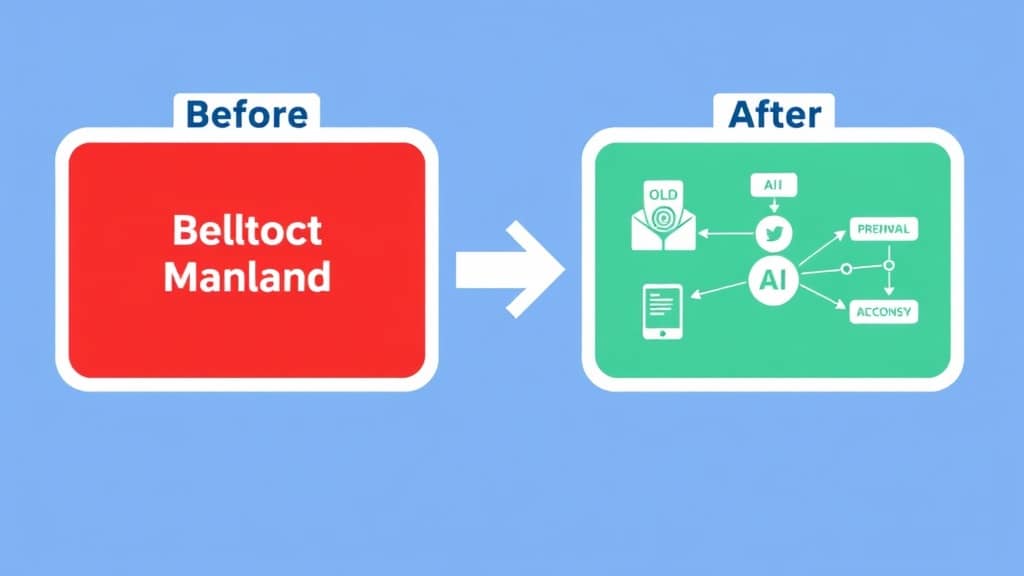
Background: CodePath, a U.S.-based nonprofit coding bootcamp serving 12,000+ students annually, was running their course delivery platform on a custom React + Express setup built in 2021. By Q3 2025, their Largest Contentful Paint (LCP) averaged 4.2 seconds on mobile — well above Google’s “poor” threshold of 4.0s — and lesson abandonment rates had climbed to 23%.
Before: Client-side rendering meant the browser had to download a 340KB JavaScript bundle, execute it, then fetch course content from the API — three sequential round trips before students saw anything meaningful. Mobile users on 4G connections experienced up to 6-second waits on first lesson load.
Migration approach: The team rebuilt the lesson delivery layer using Next.js 15 App Router with React Server Components. Course metadata and the video player shell were server-rendered; quiz components and progress tracking remained client components. They used Next.js Partial Prerendering (PPR) — stable since Next.js 15.1 — to serve a static shell instantly and stream dynamic content behind it.
After: LCP dropped from 4.2 seconds to 2.5 seconds — a 41% improvement. The JavaScript bundle shipped to students shrank from 340KB to 89KB (server components don’t ship to the client). Lesson abandonment fell from 23% to 14%, and course completion rates rose 11 percentage points in the first month post-launch.
Key result metric: The engineering team of 4 completed the migration in 6 weeks, citing Next.js’s strong TypeScript support and the App Router’s co-location of data fetching with components as the primary productivity accelerators.
Common Mistakes Developers Make When Choosing and Learning Meta-Frameworks

Mistake 1: Choosing based on hype, not job data
Why it happens: Twitter/X and YouTube algorithm surfaces whichever framework had a major release recently — SvelteKit, Qwik, and Astro all had big hype cycles that didn’t translate to proportional job listings.
The fix: Before committing 3 months to a framework, spend 30 minutes pulling actual job listings in your target market. Sort by recency. Count framework mentions. Let employer demand, not influencer content, drive your decision.
Mistake 2: Skipping React/Vue fundamentals before jumping into a meta-framework
Why it happens: Tutorials make it look like you can go straight to Next.js without understanding React deeply. You can’t — not if you want to debug RSC hydration errors or understand why your server component is accidentally marked client.
The fix: Spend 4–6 weeks on the underlying UI library first. Build 3 small apps with raw React or Vue before touching Next.js or Nuxt. The meta-framework will make dramatically more sense.
Mistake 3: Ignoring the Pages Router to App Router migration complexity in Next.js
Why it happens: Many tutorials still use the Pages Router (pre-Next.js 13), creating confusion about which patterns apply where. Developers mixing App Router and Pages Router conventions in the same codebase create hard-to-debug inconsistencies.
The fix: In 2026, learn App Router exclusively from day one unless you’re maintaining legacy code. The Vercel docs have a clear “App Router” filter — use it and ignore Pages Router content entirely.
Mistake 4: Not deploying early and often
Why it happens: Developers treat deployment as the final step after the app is “done,” then hit environment-specific SSR issues, environment variable misconfigurations, or edge runtime incompatibilities for the first time in production.
The fix: Deploy to Vercel or Netlify on day one of any new project, even if it’s a blank scaffold. Run every new feature through a preview deployment before merging. Issues that appear in production but not in development are almost always caught this way.
FAQ: JavaScript Meta-Frameworks in 2026
Which JavaScript meta-framework should I learn in 2026 — Next.js or Nuxt?
If you already know React or are starting from scratch and targeting the North American/UK job market, learn Next.js. If you know Vue or are targeting European enterprise roles, Nuxt is the smarter path. Both are excellent production choices; the decision is about your existing skills and job market, not technical superiority.
Is Next.js vs Remix for full-stack development a real competition in 2026?
Yes, but they serve different strengths. Next.js wins on ecosystem size and job availability. Remix wins on web standards alignment, streaming architecture, and form-handling ergonomics. If you’re building a data-heavy app with complex mutations, Remix deserves serious consideration. For most general full-stack work, Next.js is the pragmatic choice.
What is the best React framework for beginners to learn in 2026?
Next.js App Router, but only after you have a solid React foundation (hooks, state, component lifecycle). Skip directly to Next.js without that foundation and you’ll struggle with Server Components, hydration boundaries, and the client/server split. Build 2–3 raw React projects first, then move to Next.js.
Is SvelteKit worth learning in 2026 if I want a job quickly?
Not as your first framework if speed to employment is the goal. SvelteKit jobs exist but are significantly less common than Next.js roles. Learn it as a second framework once you’re employed — the performance insights and Svelte’s reactive model will make you a better developer overall.
How long does it take to learn Next.js from scratch in 2026?
With a React foundation already in place, most developers reach a “build real apps” level of Next.js proficiency in 6–8 weeks of consistent daily practice (2–3 hours/day). Mastery of advanced patterns like Partial Prerendering, Server Actions, and the full App Router data model typically takes another 2–3 months of project work.
Conclusion: Make the Call and Start Building

The best web framework 2026 has to offer isn’t the one with the most GitHub stars or the flashiest conference talks — it’s the one you’ll actually ship production apps with. For the majority of developers reading this, Next.js App Router is that framework. It has the deepest job market, the most mature ecosystem, and the best documentation for navigating the Server Components paradigm that has reshaped React development.
That said, if you’re a Vue developer, Nuxt 4 is excellent and you shouldn’t abandon it. If you’re building an AI-powered conversational app or a form-heavy workflow tool, Remix’s architecture genuinely fits better. And if you’re building for low-bandwidth markets, SvelteKit’s performance story is real and worth the learning investment.
Stop theorizing. Pick one. Deploy something this week. The frameworks will keep evolving — your ability to ship and iterate is the skill that compounds.
Book a Free Demo at GrowAI

