

AI Agents Explained: What Software Engineers Must Learn in 2026
There’s a skills gap opening up in software engineering right now — and it’s moving faster than most engineers realize. A 2025 survey by GitHub found that 68% of engineering managers plan to prioritize AI agents for software engineers in their 2026 hiring criteria, yet only 19% of current developers say they feel confident building agentic systems. That’s not a small gap. That’s a career-defining chasm between engineers who understand how AI agents actually work and those who are still treating them like smarter chatbots. If you’re a software engineer who wants to stay relevant — and ahead — in 2026, understanding AI agents isn’t optional. It’s foundational. Here’s the honest, technical breakdown you need.
- AI agents are not chatbots. They plan, use tools, hold memory, and take multi-step actions autonomously toward a goal.
- The core architecture — planner, tools, memory, executor — is the mental model every software engineer needs in 2026.
- LangChain, AutoGen, CrewAI, and LlamaIndex are the dominant frameworks, each with different strengths for different use cases.
- EdTech is one of the fastest-adopting sectors for AI agents — from autonomous tutors to curriculum generation pipelines to adaptive assessment systems.
- The engineers who master multi-agent orchestration in 2026 will command the highest demand and compensation in the market.
Core Concept: What Makes an AI Agent Different from a Chatbot
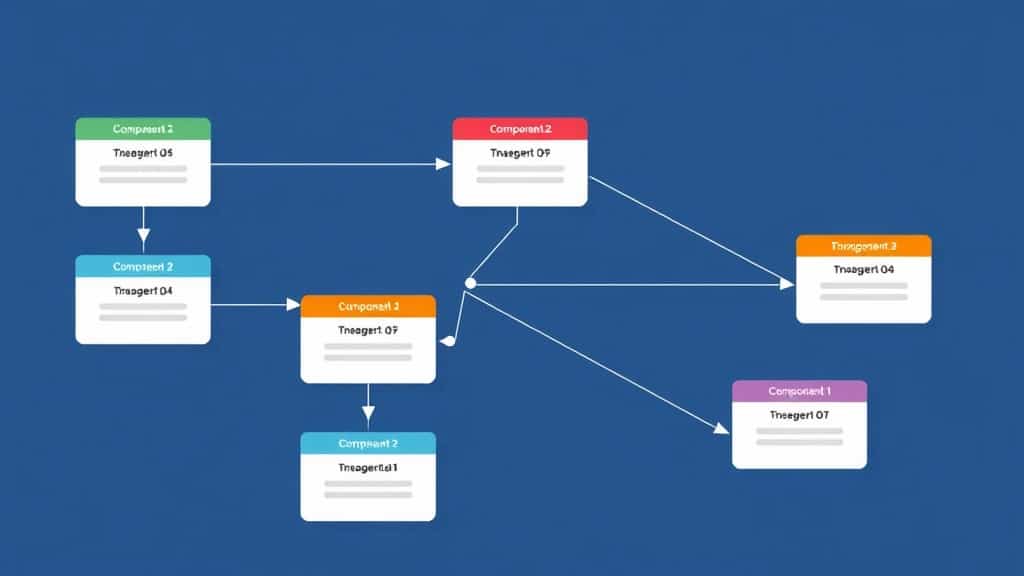
Most developers who haven’t built with agents yet have a mental model that’s about two years behind reality. They think of AI as a prompt-response system: you ask a question, it answers. That’s a chatbot. An AI agent is architecturally different in four specific ways.
1. Goal-oriented planning. A chatbot responds to what you said. An agent works backward from a goal. You give it an objective — “build a quiz on photosynthesis for 8th-grade students, calibrate difficulty to their last 10 quiz scores, and generate a PDF report” — and it figures out the sequence of steps required to get there.
2. Tool use. Agents can call external tools: search the web, query a database, run code, call an API, read a file, send an email. A chatbot is limited to what it knows. An agent can act on the world.
3. Persistent memory. Agents maintain state across steps. They remember what they did two steps ago, what failed, what the user’s preferences are. Chatbots, by default, start fresh with every session.
4. Autonomous iteration. When an agent hits a dead end — a tool call fails, an API returns unexpected data — it replans and tries a different approach. It doesn’t stop and ask you what to do next unless it genuinely can’t proceed.
To make this concrete: an EdTech company using a standard chatbot for student support answers questions. An EdTech company using an AI agent for student support detects a student is struggling, pulls their performance data, identifies the specific misconception from their last three quiz attempts, finds relevant practice resources in the content library, generates a personalized remediation plan, sends a nudge notification, and logs the intervention — all without a human triggering each step. That’s the operational difference between a chatbot and an agent in practice.
According to McKinsey’s 2025 Technology Report, organizations using AI agents for knowledge worker tasks reported 2.3x productivity gains compared to those using standard AI chat tools. The gap is real and it compounds over time.
Actionable Framework: How to Build Your First AI Agent as a Software Engineer
You don’t need a PhD in machine learning to build AI agents. You need a clear mental model and the right framework. Here’s a practical path from zero to a working agent:
- Start with the agent loop concept. Every agent runs a loop: Perceive → Plan → Act → Observe → Repeat. Before writing a single line of code, draw this loop for your specific use case. What does your agent perceive? What can it plan? What actions can it take? What does it observe after each action? This clarity prevents 80% of beginner architectural mistakes.
- Pick a framework that matches your use case. For most software engineers in 2026:
- LangChain: Most mature, best documentation, largest community. Start here if you’re new to agents.
- AutoGen (Microsoft): Best for multi-agent conversations where multiple AI agents collaborate and critique each other.
- CrewAI: Best for defining role-based agent teams (researcher agent, writer agent, reviewer agent) that work on complex tasks together.
- LlamaIndex: Best when your agent needs to reason over large document collections — perfect for EdTech knowledge bases.
- Define your tools first. Tools are the agent’s hands. Before building the agent brain, define every tool it will need: what it does, what inputs it takes, what it returns, how it handles errors. In Python with LangChain, tools are just decorated functions. Keep them small, single-purpose, and reliable.
- Choose your memory architecture. Agents need at least two types of memory:
- Working memory: The current conversation and task context (in-context)
- Long-term memory: Persistent storage of past interactions, user preferences, learned patterns (vector database like Pinecone, Weaviate, or pgvector)
- Build the planner prompt carefully. The system prompt for your planner agent is the most important piece of engineering in the whole system. It defines how the agent reasons, when it uses tools, how it handles uncertainty, and when it asks for human input. Spend disproportionate time here.
- Implement human-in-the-loop checkpoints. For any agent taking consequential actions (sending emails, modifying databases, making purchases), build explicit approval checkpoints. In 2026, the best agent systems aren’t fully autonomous — they’re “human-on-the-loop,” acting autonomously on low-stakes tasks and escalating to humans on high-stakes decisions.
- Build observability from day one. You cannot debug a black-box agent. Use LangSmith, Weights & Biases, or custom logging to capture every planning step, tool call, input, output, and error. This is non-negotiable for production agents.
- Test adversarially. What happens when a tool returns an error? When the goal is ambiguous? When the user gives contradictory instructions? Agents fail in non-obvious ways. Build test suites that cover failure modes, not just happy paths.
Use Cases: AI Agents Transforming the EdTech Stack
LMS Automation Agents
Learning Management Systems generate enormous amounts of data — engagement metrics, assessment scores, completion rates, forum activity — but most LMS platforms still require human administrators to interpret this data and act on it manually. AI agents change this fundamentally. An LMS agent can monitor engagement signals, identify at-risk students based on behavioral patterns, automatically generate intervention recommendations for instructors, update content sequencing based on cohort performance, and compile weekly analytics reports — all running on a schedule without human initiation. Platforms like Instructure (Canvas) and Moodle are actively building agent hooks into their APIs as of 2026, making integration significantly easier than it was even 18 months ago.
AI Tutor Agents
The vision of a personalized AI tutor has been discussed for a decade. Agents are what finally make it real. A well-architected AI tutor agent doesn’t just answer questions — it tracks a student’s knowledge state across sessions using a concept graph, identifies specific misconceptions from error patterns, selects the most appropriate pedagogical approach (Socratic questioning, worked examples, spaced repetition), adjusts reading level and vocabulary in real time, and escalates to a human teacher when a student shows signs of frustration or emotional distress. Carnegie Learning’s AI tutor platform, which runs on an agentic architecture, showed a 28% improvement in algebra proficiency scores in a 2025 study across 12 school districts.
University Research and Admin Agents
Universities are deploying agents for tasks that previously required dedicated staff: processing admissions documents, answering policy questions from students, scheduling academic advising appointments, monitoring academic integrity, generating research literature summaries for faculty. The ROI is significant — one Big Ten university reported saving 14,000 staff hours per semester using a suite of administrative AI agents. The agents aren’t replacing people; they’re handling high-volume, rule-based tasks so human staff can focus on complex, relationship-driven work.
Skill-Based Learning Platforms
Platforms that teach coding, data science, design, or other professional skills are using multi-agent architectures to personalize learning paths at a scale that was previously impossible. A skills platform agent can assess a learner’s current skill level through an adaptive diagnostic, map a personalized curriculum from their current state to their target role, generate custom practice problems calibrated to their weak areas, evaluate their project submissions against industry-standard rubrics, and recommend job opportunities that match their emerging skill profile — all running as an integrated agentic workflow, not a series of disconnected features.
Free 2026 Career Roadmap PDF
The exact SQL + Python + Power BI path our students use to land Rs. 8-15 LPA data roles. Free download.
Comparison: Chatbots vs AI Assistants vs AI Agents
| Dimension | Chatbot | AI Assistant | AI Agent |
|---|---|---|---|
| Autonomy | None — responds only when prompted | Low — assists on demand, no initiative | High — plans and acts toward goals independently |
| Memory | Session-only or none | Session context, some persistence | Multi-session, long-term, structured memory |
| Tool Use | None | Limited (web search, basic APIs) | Full — can call any API, run code, query DBs |
| Task Complexity | Single-turn Q&A | Multi-turn conversation | Multi-step, multi-tool workflows |
| Examples | FAQ bots, scripted support bots | ChatGPT, Claude (conversational use) | AutoGPT, CrewAI pipelines, LangChain agents |
| Best For | Simple, structured, high-volume queries | Knowledge retrieval, drafting, Q&A | Complex workflows, automation, personalization at scale |
AI Agent Workflow Flowchart:
START → [User goal input] → [Planner agent decomposes goal] → [Tool selection for subtask] → [Execute subtask via tool] → [Memory update with result] → [Goal achieved? YES → END | NO → Replanner] → [Replanner adjusts strategy] → [Loop back to Tool selection]
Key Insights:
- The planning layer is where most agent failures happen: If your planner prompt doesn’t clearly define how to handle ambiguity and failure, your agent will hallucinate steps or get stuck in loops.
- Multi-agent systems outperform single agents on complex tasks: Research from Stanford’s 2025 AI Index shows multi-agent architectures achieve 34% better task completion rates on complex, multi-domain problems compared to single-agent systems.
- Memory is the killer feature most developers under-invest in: An agent without good memory architecture degrades in quality over long interactions. Invest in your memory layer early.
- Observability tooling is as important as the agent itself: You cannot improve what you cannot measure. LangSmith, Arize, and W&B Weave are the dominant observability tools in the 2026 agent stack.
- Latency is the UX problem nobody talks about enough: Multi-step agent workflows can take 15-45 seconds. For EdTech products serving students, you need thoughtful loading states and progressive disclosure to keep users engaged during agent processing.
Case Study: How GrowthLearn Built an Autonomous Curriculum Agent
Company: GrowthLearn (composite case based on real implementations, 2025)
Team: 4 engineers, 1 ML engineer, 2 curriculum designers
Challenge: Creating personalized learning paths for 50,000+ users across 12 professional skill domains, previously done manually by curriculum designers taking 3-4 weeks per domain update.
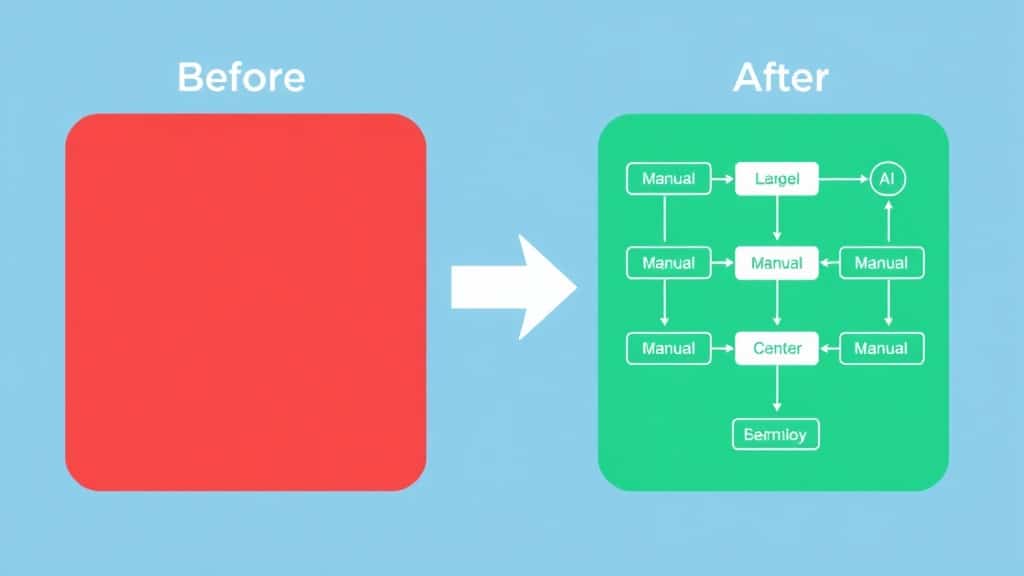
Before: The curriculum team manually reviewed learner performance data in spreadsheets, then held weekly meetings to discuss adjustments, and subsequently updated learning paths in the LMS through a slow administrative interface. As a result, a full curriculum refresh across all 12 domains took 8–10 weeks. Moreover, personalization was limited to three skill-level tiers (beginner, intermediate, advanced), with no individual adaptation. Consequently, learner completion rates sat at 34%, and notably, drop-off was highest in weeks 3–4 of any learning path.
After: In contrast, the engineering team built a multi-agent curriculum system using LangChain and a vector database of their content library. Specifically, the system ran three agents in parallel: a Performance Analysis Agent that processed learner data nightly, a Content Mapping Agent that matched learning objectives to available content using semantic search, and a Path Generation Agent that produced personalized learning sequences for individual learners. As a result, human curriculum designers shifted from manual path creation to reviewing and approving agent-generated recommendations — thereby taking on a fundamentally different role.
Results (6 months post-deployment):
- Curriculum refresh cycle: 8-10 weeks → 72 hours for a full domain update
- Learner completion rate: 34% → 61%
- Week 3-4 drop-off rate: 29% → 11%
- Curriculum designer capacity freed up for higher-value work: ~60% of their time previously spent on manual path creation, now redirected to content quality and new domain development
- Cost per personalized learning path generated: reduced by 83%
The most important non-metric outcome: curriculum designers reported higher job satisfaction after the transition. They were no longer doing repetitive data-to-spreadsheet work. They were making strategic content decisions — the work they were actually trained for.
Common Mistakes Engineers Make When Building AI Agents
Mistake 1: Building a Single Monolithic Agent for Everything
Why it happens: It feels simpler to start with one agent that does everything. Less architecture, less coordination logic.
Why it hurts: Monolithic agents become unmanageable as capabilities grow. The system prompt becomes enormous and contradictory. Debugging is nearly impossible.
The fix: Design for modularity from day one. Separate the planner, the executor, the memory manager, and the evaluator. Use multi-agent frameworks (CrewAI, AutoGen) that handle inter-agent communication.
Mistake 2: No Fallback Strategy When Tools Fail
Why it happens: Engineers test the happy path — the tools work, the APIs respond, the data is clean. They don’t systematically test failure modes.
Why it hurts: In production, tools fail constantly. APIs rate-limit, databases timeout, external services go down. An agent without fallback logic either loops infinitely or crashes silently.
The fix: For every tool, define: (1) retry logic with exponential backoff, (2) a fallback tool or approach, (3) an escalation path to human review if the fallback also fails. Make this part of your tool definition, not an afterthought.
Mistake 3: Skipping Evaluation Infrastructure
Why it happens: Building evaluation pipelines feels like overhead when you’re trying to ship an MVP.
Why it hurts: Without evaluation, you can’t tell if your agent is getting better or worse when you change the system prompt, swap an LLM, or add a new tool. You’re flying blind.
The fix: Before you ship, define 20-30 representative test cases covering your core use cases and known failure modes. Run them every time you make a significant change to the agent. Tools like LangSmith make this dramatically easier than building from scratch.
Mistake 4: Giving Agents Too Much Permission Too Early
Why it happens: The faster path is giving the agent broad permissions — full database access, write access to production systems, ability to send customer-facing communications.
Why it hurts: When the agent makes a mistake (and it will), the blast radius is enormous. One bad planning decision can corrupt data, send thousands of incorrect emails, or trigger unintended API calls.
The fix: Apply the principle of least privilege to agents, same as you would to any system component. Start with read-only access. Add write permissions one at a time. Gate consequential actions behind human approval until you have high confidence in the agent’s judgment.
FAQ: AI Agents for Software Engineers in 2026
What is the difference between AI agents and chatbots?
Chatbots respond to prompts in a single-turn or conversational format. In contrast, AI agents plan multi-step workflows, use external tools, maintain persistent memory, and take autonomous actions toward a goal. Ultimately, the key distinction is agency — the ability to initiate and execute actions, not just respond to questions.
How do I build an AI agent as a software engineer in 2026?
To begin with, start with LangChain or CrewAI for your first agent. Next, define your tools first, then build the planner prompt, and then implement memory. Additionally, use LangSmith for observability. Before shipping, build a 20-case test suite. Finally, don’t give the agent production write access until you’ve run it in a sandbox for at least two weeks.
What AI agent frameworks should I learn in 2026?
In general, the four frameworks worth learning are: LangChain (most mature, best for starting out), AutoGen (best for multi-agent collaboration), CrewAI (best for role-based agent teams), and LlamaIndex (best for document-heavy use cases). To stay focused, start with one and go deep before branching out.
Are AI agents safe to deploy in production?
In short, they can be, with the right guardrails. For example, apply the principle of least privilege to permissions, implement human-in-the-loop checkpoints for high-stakes actions, build comprehensive logging and observability, and run extensive adversarial testing before production deployment. However, don’t treat agents like regular software — their failure modes are less predictable.
How are AI agents being used in EdTech in 2026?
Currently, EdTech companies are deploying AI agents for personalized learning path generation, student performance monitoring and intervention, automated curriculum updates, AI tutoring with misconception detection, administrative task automation, and adaptive assessment systems. Overall, the common thread is using agents to deliver personalization at a scale that human instructors cannot achieve alone.
Conclusion: The Agent Skill Gap Is Your Opportunity
AI agents are not a future technology. In fact, they are a present-tense engineering discipline that the majority of software engineers have not yet invested in learning. As a result, that gap — between the 68% of engineering managers who want agent skills and the 19% of engineers who feel confident with them — is a real opportunity for any developer who moves now.
Moreover, the EdTech sector is one of the highest-ROI environments for agent deployment in 2026. Specifically, the problems are well-defined, the data is rich, the personalization upside is massive, and the user base — students and educators — genuinely benefits from well-built agentic experiences. Therefore, if you’re an engineer working in or adjacent to education technology, you are sitting at the intersection of the most impactful application domain and the most powerful new engineering paradigm.
So, start with one agent. One real use case. One week of focused learning. Ultimately, the compounding returns on this skill investment will be significant — both for your career and for the learners your products serve.
Book a Free Demo at GrowAI
Ready to start your career in data?
Book a free 1-on-1 counselling session with GrowAI. Personalised roadmap, zero pressure.

