

QA Automation Portfolio: Build 3 Projects That Get You Hired in India 2026
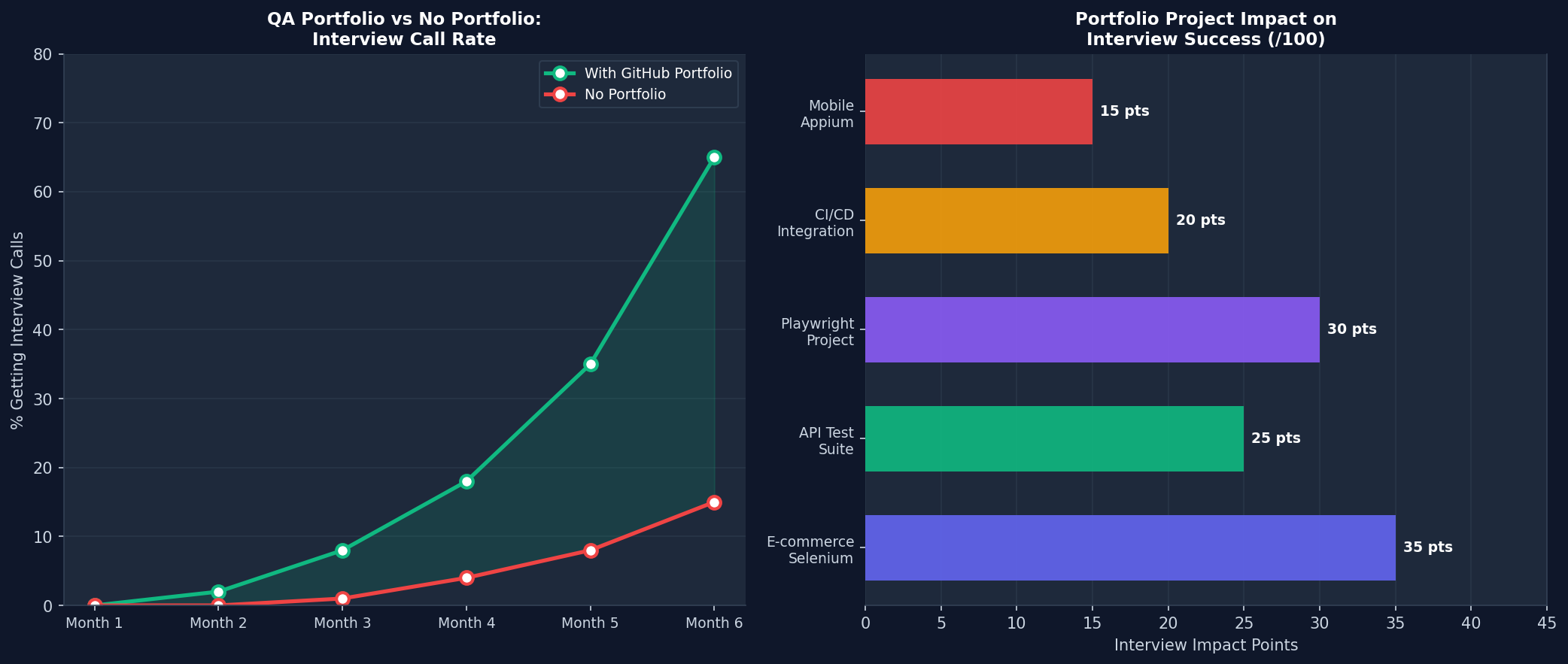
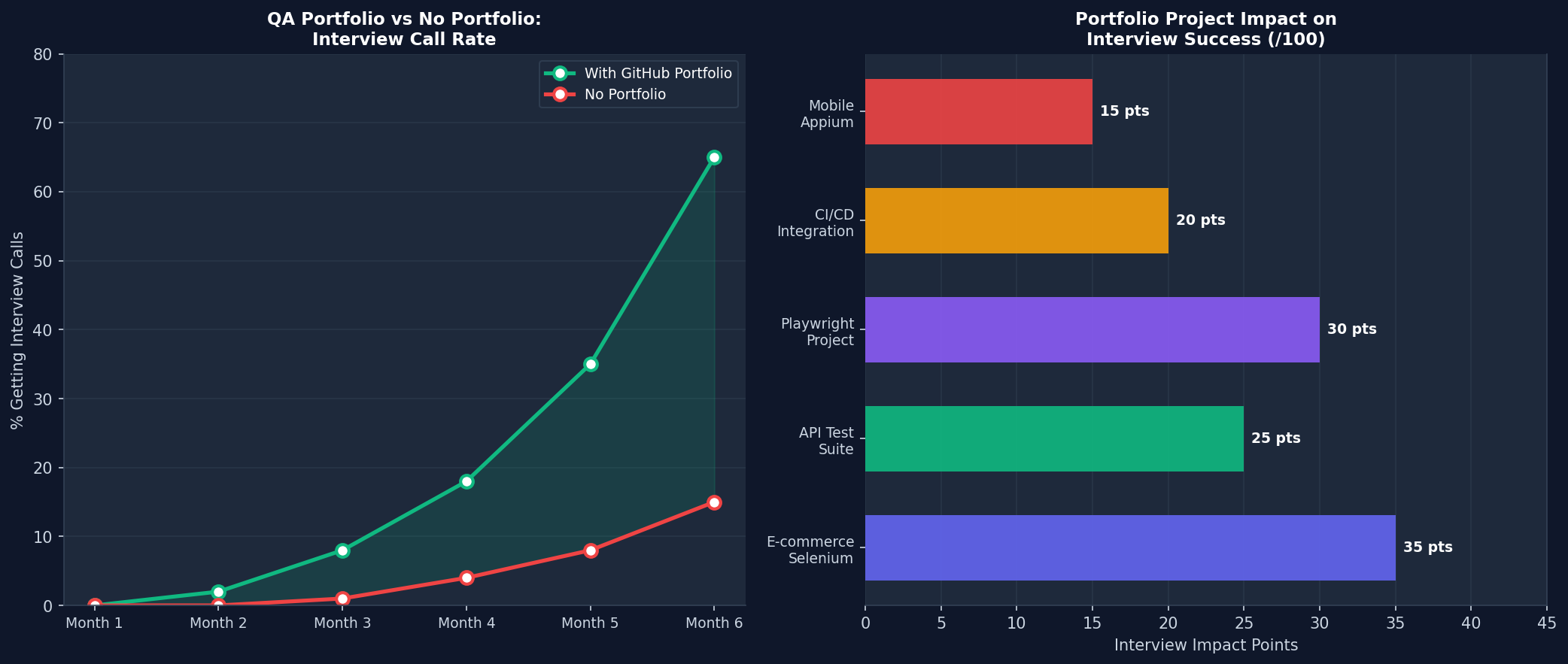
A QA automation portfolio is the single most powerful job search tool for engineers in India in 2026. Candidates with 3 well-documented GitHub automation projects get 4x more interview calls than those without portfolios, even when competing against candidates with 2+ years of manual testing experience. This guide shows you exactly which projects to build, how to structure them, and how to present them to get hired.
Why Portfolio Beats Certificates for QA Jobs in India
Companies hiring QA automation engineers in 2026 face one core problem: candidates who can pass theory interviews but cannot write real automation code. A GitHub portfolio solves this before the interview even starts.
- ISTQB certificate tells employers you studied — GitHub shows you can build
- Recruiters screen portfolios before scheduling interviews at Freshworks, Razorpay, and Mphasis
- A portfolio with 50+ commits demonstrates consistent daily practice — the highest signal of a serious candidate
- Interviewers can ask specific questions about your project — you answer with confidence because you built it
Project 1: E-Commerce UI Automation Suite (Selenium + TestNG)
The most requested project type in QA fresher interviews. Use SauceDemo (saucedemo.com) — a free practice e-commerce site built specifically for QA training.
What to build:
- Login: valid login, invalid credentials, empty fields
- Product catalog: sort by price, filter by category, verify product count
- Cart: add single item, add multiple items, remove item, verify total
- Checkout: complete purchase flow end-to-end, verify order confirmation
- Negative tests: checkout with empty cart, invalid credit card format
Required framework structure:
ecommerce-automation/
  src/
    main/java/
      pages/          # LoginPage, CartPage, CheckoutPage (POM)
      utils/          # WebDriverFactory, WaitUtils, ConfigReader
      base/           # BaseTest (setup/teardown)
    test/java/
      tests/          # LoginTest, CartTest, CheckoutTest
      testdata/       # Excel test data files
  resources/
    testng.xml        # Parallel execution config
    config.properties # URLs, credentials, browser
  pom.xml
  README.md           # CRITICAL: explain setup, how to run, test results screenshot
Must-have features:
- Parallel execution configured in testng.xml
- ExtentReports HTML report with screenshots on failure
- Data-driven tests reading from Excel (at least 2 tests)
- GitHub Actions CI workflow that runs on every push
Project 2: API Test Automation Suite (RestAssured / Pytest)
API testing is asked in 68% of QA interviews. Use the free public Petstore API or JSONPlaceholder for this project.
What to build:
- CRUD operations: GET user, POST create user, PUT update, DELETE
- Assertions: status code, response body fields, schema validation
- Auth testing: bearer token, API key headers
- Negative tests: 404 for non-existent resource, 400 for bad request body
- Chain requests: create a resource in one test, use the ID in the next
# Python + Pytest + requests example
import pytest
import requests

BASE_URL = "https://jsonplaceholder.typicode.com"

class TestUserAPI:
    def test_get_user(self):
        response = requests.get(f"{BASE_URL}/users/1")
        assert response.status_code == 200
        data = response.json()
        assert data["id"] == 1
        assert "name" in data
        assert "email" in data

    def test_create_user(self):
        payload = {"name": "QA Tester", "email": "qa@test.com"}
        response = requests.post(f"{BASE_URL}/users", json=payload)
        assert response.status_code == 201
assert response.json()["name"] == "QA Tester"Project 3: Playwright Test Suite with CI/CD (Most Impressive)
The project that differentiates you from 90% of other candidates. Playwright is modern, and adding a working CI/CD pipeline signals senior engineer thinking.
What to build:
- Playwright + Python test suite for any public website (OrangeHRM, nopCommerce)
- Page Object Model with fixtures and conftest.py
- Parallel execution across Chrome, Firefox, Safari
- GitHub Actions workflow running tests on every PR
- Playwright HTML report published as GitHub Pages artifact
GitHub Actions workflow (the key differentiator):
# .github/workflows/playwright.yml
name: Playwright Tests
on: [push, pull_request]
jobs:
  test:
    runs-on: ubuntu-latest
    steps:
      - uses: actions/checkout@v4
      - uses: actions/setup-python@v4
        with:
          python-version: '3.11'
      - run: pip install playwright pytest-playwright
      - run: playwright install --with-deps
      - run: pytest tests/ --html=report.html
      - uses: actions/upload-artifact@v4
        with:
          name: playwright-report
          path: report.html
How to Present Your Portfolio in Interviews
- GitHub profile README: Add a skills section and link all 3 projects prominently
- Each repo README must have: Project description, tech stack, how to run locally, screenshot of passing tests, CI badge
- Walk-through ready: Prepare a 3-minute demo of each project — what it tests, how POM works, how CI triggers
- Commit history matters: 50+ commits spread over weeks shows consistent practice — not 50 commits in one day
- Keep projects live: Use GitHub Actions to verify tests still pass — interviewers may check during interview
Portfolio Mistakes to Avoid
- Only one project — build minimum 3, ideally all in different tools
- No README — a repo without explanation looks abandoned
- Empty commit history — shows all code was dumped at once (copy-paste red flag)
- Only passing tests — include negative test cases to show you think like a QA engineer
- No framework structure — raw test files without POM shows beginner-level thinking
Frequently Asked Questions
How many GitHub projects do I need for a QA automation job in India?
Minimum 3 projects: one UI automation (Selenium + Java or Playwright + Python), one API test suite (RestAssured or Pytest + requests), and one hybrid or CI/CD integrated project. Three projects covering different testing types shows depth and versatility.
Can I use dummy websites like SauceDemo for my portfolio?
Yes — SauceDemo, OrangeHRM, nopCommerce, and DemoQA are widely accepted portfolio sites that every QA interviewer recognizes. They are built specifically for test practice. Testing a public production site is actually worse — it creates ethical and stability issues.
Should I make my portfolio repositories public or private?
Public — always. The entire point of a GitHub portfolio is that interviewers and recruiters can see your code. Private repos defeat the purpose. Make sure there are no credentials, API keys, or personal data in your code before making repos public.
How long does it take to build a strong QA portfolio from scratch?
With 2-3 hours daily practice: Project 1 (Selenium) takes 3-4 weeks to build well. Project 2 (API testing) takes 2 weeks. Project 3 (Playwright + CI) takes 2-3 weeks. Total: 7-10 weeks for a portfolio that genuinely impresses interviewers. Rush jobs show — take the time to do it right.
