

Agentic AI vs AI Assistants: What’s the Real Difference in 2026?
You ask ChatGPT to research your top 5 competitors. It gives you a text summary based on training data from 18 months ago. You ask an agentic AI the same thing. It searches the web, visits their pricing pages, extracts data, builds a comparison table, and emails it to you — all in 4 minutes.
That gap — between answering a question and completing a goal — is exactly what separates AI assistants from agentic AI. And in 2026, that gap is reshaping entire job functions, business workflows, and the skills companies are willing to pay a premium for.
If you work in data, marketing, HR, or operations, understanding this distinction is no longer optional. It is the difference between using AI as a search bar and deploying it as a full-time autonomous team member.
TL;DR — What You Need to Know in 60 Seconds
- AI assistants (ChatGPT, Siri, Copilot) are reactive — they respond to prompts but take no independent action.
- Agentic AI is proactive and goal-driven — it breaks down objectives, uses tools, executes tasks across multiple steps, and self-corrects.
- The four core differences are: autonomy, tool use, memory & planning, and error handling.
- Real-world agentic AI is already transforming sales pipelines, HR screening, data analytics, and marketing campaigns.
- The career opportunity is clear: professionals who can design, prompt, and manage AI agents using Python, LangChain, and API integration are among the most sought-after in the market right now.
AI Assistants vs Agentic AI: The Fundamental Difference
AI assistants are reactive. They wait for input, process it, and return a single output — usually text. ChatGPT answers your question. Siri sets your alarm. The interaction is linear: one input, one output, done. The AI has no awareness of what came before, no ability to take action in the world, and no persistence between sessions unless specifically engineered.
Agentic AI is proactive and goal-oriented. Instead of answering a question, it receives a goal and figures out how to achieve it. It breaks the goal into sub-tasks, selects which tools to use for each task, executes them in sequence or parallel, evaluates the results, adjusts its plan when something doesn’t work, and loops until the goal is complete.
Think of it this way: asking an AI assistant to “prepare a competitor analysis” gets you a paragraph. Asking an agentic AI the same thing triggers a workflow that searches Google, scrapes five competitor websites, reads their pricing pages, pulls LinkedIn employee counts, formats everything into a structured report, and sends it to your inbox. No follow-up prompts required.
Frameworks like LangChain Agents, AutoGPT, n8n AI Agents, OpenAI Assistants API, and Microsoft AutoGen are the infrastructure that makes this possible.
The 4 Key Dimensions That Separate Agentic AI from AI Assistants
1. Autonomy
AI assistants have zero autonomy. Every action requires an explicit human prompt. You ask, it answers. You stop asking, it stops working.
Agentic AI operates with delegated autonomy. You set the goal and the constraints. The agent decides how to achieve the goal without requiring step-by-step instruction. A sales agent built with AutoGen can be given the objective “identify 50 qualified leads in the SaaS HR space and add them to HubSpot” — and it will execute that workflow start to finish, only surfacing exceptions that require human judgment.
2. Tool Use
AI assistants are text-in, text-out. Agentic AI can call APIs, browse the web, read and write files, query databases, send emails, run code, trigger workflows, and interact with CRMs.
In a LangChain agent, “tools” are defined functions the agent can invoke. You might give an agent access to a Google Search tool, a Python code executor, a database query tool, and an email API. The agent decides which tools to use and in what order based on the task at hand.
3. Memory and Planning
Standard AI assistants have no persistent memory. Each conversation starts from zero. This makes them unsuitable for any multi-session workflow.
Agentic AI architectures include multiple memory types: short-term memory for current task context, long-term memory via vector databases (Pinecone, ChromaDB) for cross-session storage, and episodic memory that tracks what the agent has already tried. Planning is equally important — when given a complex goal, an agentic AI generates a task plan before executing, similar to how a project manager breaks a project into milestones.
Free 2026 Career Roadmap PDF
The exact SQL + Python + Power BI path our students use to land Rs. 8-15 LPA data roles. Free download.
4. Error Handling
Ask an AI assistant a question it can’t answer well and the loop ends there — with a hallucination or an “I don’t know.”
A well-built agentic AI handles errors as part of its execution logic. If a web scraper fails because a page requires login, the agent logs the failure, tries an alternative source, and continues. If code execution returns an error, the agent reads the error message, revises the code, and retries. This self-correction behavior — sometimes called “reflexion” — is what makes agents reliable enough for production workflows.
Agentic AI in Action: Real Use Cases Across Industries
Sales and CRM Automation
A sales team at a mid-size B2B software company deploys an agent built on the OpenAI Assistants API with Salesforce and LinkedIn integrations. Each morning, the agent identifies newly funded companies in their target segment, researches the decision-makers, drafts personalized outreach emails, and logs the contacts in Salesforce — flagging the top 10 prospects for the sales rep to review. What previously took 3 hours now takes 12 minutes.
Data Analytics Pipelines
A data team uses an n8n AI agent to automate their weekly reporting workflow. The agent pulls raw data from multiple sources (Google Analytics, PostgreSQL, Stripe), runs Python scripts for transformation and anomaly detection, generates visualizations, writes an executive summary, and sends the report to stakeholders — without a single manual step.
HR Candidate Screening
An HR department at a logistics firm deploys an agentic AI to handle first-pass resume screening. The agent receives applications, parses resumes, scores candidates against a defined rubric, cross-checks LinkedIn profiles, sends acknowledgment emails, and populates a shortlist in their ATS. Application processing time dropped from 5 days to 6 hours.
Marketing Campaign Management
A digital agency uses a LangChain-based agent to manage content production workflows. Given a campaign brief, the agent researches the topic, drafts three content variations, checks them against SEO guidelines via search API, routes them for human approval, and schedules publishing via the CMS API. Campaign launch cycles that previously required 4 team members over 2 weeks now run with 1 strategist overseeing an agent that handles execution.
AI Assistant vs Agentic AI: A Direct Comparison
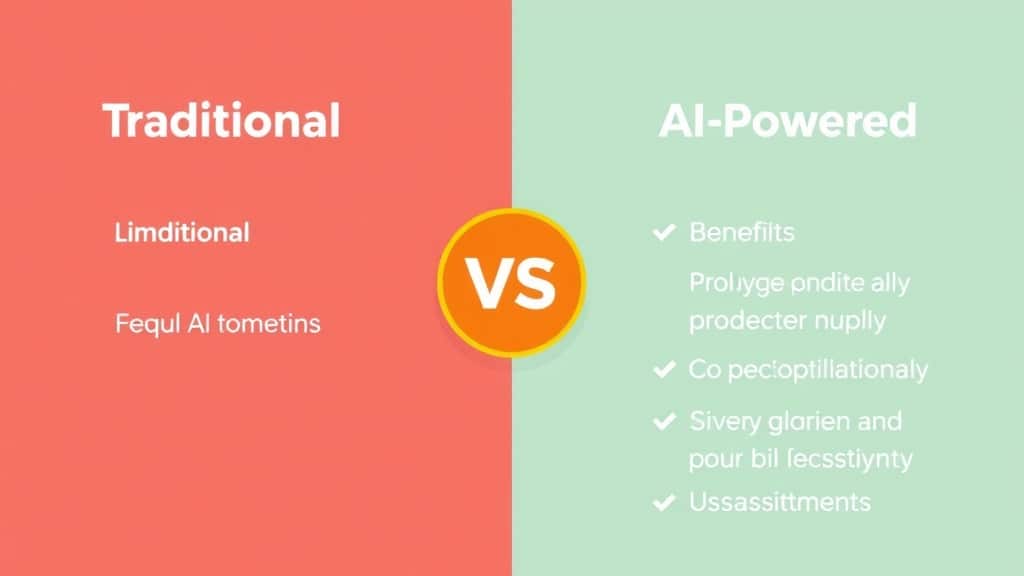
| Dimension | AI Assistant | Agentic AI |
|---|---|---|
| Autonomy | Reactive — requires prompt for every action | Proactive — pursues goals with minimal input |
| Tool Use | Text output only | Calls APIs, browses web, runs code, sends emails |
| Memory | Session-only, no persistence | Short-term, long-term, and episodic memory |
| Error Handling | Stops or hallucinates on failure | Self-corrects, retries, and escalates when needed |
| Task Complexity | Single-step tasks | Multi-step, multi-tool, multi-session workflows |
| Human Input Needed | Required at every step | Required only at goal-setting and exception points |
| Example Tools | ChatGPT, Siri, Alexa, Gemini, Copilot | LangChain Agents, AutoGPT, AutoGen, n8n AI Agents, OpenAI Assistants API |
How an Agentic AI Workflow Actually Runs
↓
User Sets Goal
↓
Agent Breaks Goal into Sub-Tasks
↓
Executes Task 1 (selects and calls tool)
↓
Evaluates Result → Acceptable? → No: Adjust Plan and Retry
↓ Yes
Executes Task 2 → … → All Tasks Complete
↓
Goal Achieved → Agent Reports to User
↓
END
Key Insights
- The shift from AI assistants to agentic AI is not an upgrade — it is a category change. One answers questions; the other completes objectives.
- Agentic AI’s value is proportional to the quality of its tool integrations. An agent with the right APIs is exponentially more useful than one limited to text generation.
- Memory architecture is the most underestimated component. Agents without persistent memory cannot learn from previous runs and will repeat the same mistakes.
- Autonomous AI systems without guardrails are a liability. The most effective deployments pair high autonomy with clearly defined permission boundaries and human escalation paths.
- The frameworks that matter in 2026 — LangChain, AutoGen, n8n, OpenAI Assistants API — are evolving rapidly. Professionals who invest in hands-on experience now will have a significant advantage.
- Agentic AI is not replacing human judgment — it is replacing the manual execution that consumes human time. Strategic thinking, oversight, and system design remain distinctly human responsibilities.
Case Study: How a Growth Marketing Agency Automated Its Entire Reporting Workflow
The Challenge
A 25-person digital growth agency managing 40+ client accounts spent every Monday with three analysts combining 18 hours pulling data from Google Analytics, Meta Ads, Google Ads, and HubSpot, formatting reports, writing performance summaries, and emailing clients. Manual copy-paste mistakes appeared in roughly 1 in 5 reports — and there was no time left for actual strategic analysis.
The Solution
The team built an agentic AI pipeline using LangChain Agents integrated with their analytics APIs, a Python code execution environment, and a GPT-4 layer for narrative generation. The agent pulls performance data every Sunday night, runs anomaly detection scripts, generates client-specific narratives from a long-term memory store containing historical benchmarks, formats branded PDF reports, and delivers them to each client by 8am Monday — flagging any data pipeline errors for human review before send.
The Results
- Reporting time reduced from 18 analyst-hours/week to under 2 hours (human review of exceptions only)
- Manual data errors dropped to zero — structured API calls eliminated copy-paste entirely
- Report delivery moved to Monday 8am consistently
- Analysts shifted to strategic work, contributing to a 22% improvement in client retention over 6 months
- Agency onboarded 8 new clients without adding headcount
Common Mistakes When Building Agentic AI
Mistake 1: Over-Autonomy Without Guardrails
The agent is given broad permissions and no escalation logic — it makes consequential decisions like sending emails to wrong recipients or making costly API calls without any human checkpoint.
Fix: Define a permission hierarchy before deployment. Categorize every tool action as low-risk (execute freely), medium-risk (log and proceed), or high-risk (pause for human approval). Build this logic into the agent’s decision layer from the start.
Mistake 2: No Memory Architecture
The agent completes tasks in isolation with no record of previous runs — it repeats failed approaches and can’t personalize outputs based on past interactions.
Fix: Implement a memory layer from day one. Use a vector database (Pinecone, ChromaDB, or Weaviate) for semantic long-term storage. Define what the agent should remember, for how long, and when to retrieve vs. discard context.
Mistake 3: Wrong Tool Permissions
The agent is given write access when read-only would suffice, creating unnecessary exposure — a compromised agent with delete permissions in a production database is a serious incident.
Fix: Apply the principle of least privilege to every tool integration. Use sandbox environments for testing agents before granting production access.
Mistake 4: No Fallback to Human
When the agent encounters an edge case it can’t handle, it either fails silently, loops indefinitely, or makes a guess that turns out wrong.
Fix: Design explicit fallback triggers — conditions under which the agent must stop and escalate. A human-in-the-loop is not a sign of a weak agent. It is a sign of a well-engineered one.
Frequently Asked Questions
What is the difference between agentic AI and AI assistants?
AI assistants are reactive systems that respond to a single prompt with a single output — they answer questions but take no independent action. Agentic AI is goal-driven — it receives an objective, breaks it into sub-tasks, uses tools and APIs to execute those tasks, and self-corrects when something goes wrong. The core distinction is autonomy: an AI assistant needs a human to drive every step; an agentic AI drives itself once a goal is set.
How is agentic AI changing jobs in 2026?
Agentic AI is eliminating the execution layer of many knowledge-worker roles — the manual, repetitive tasks that consume time without requiring deep judgment. At the same time, demand is rising sharply for professionals who can design, configure, and oversee agentic systems — skills in Python, LangChain, prompt engineering, and API integration are now among the highest-paying in the AI job market.
What frameworks are used to build agentic AI systems?
The leading frameworks in 2026 include LangChain Agents (most widely used for custom agent pipelines), Microsoft AutoGen (for multi-agent collaboration), OpenAI Assistants API (for integrating agents into existing OpenAI workflows), AutoGPT (for autonomous task execution), and n8n AI Agents (for no-code/low-code workflow automation).
Is agentic AI safe to use in production environments?
Yes — when built correctly. Production-ready deployments include clearly defined tool permission boundaries, human escalation triggers for high-stakes decisions, audit logs for every agent action, sandbox testing before production access, and defined fallback behaviors when the agent encounters failure states. Agents deployed without these safeguards carry real operational risk.
What skills do I need to build and manage AI agents?
The core technical skills are Python programming, familiarity with LangChain or AutoGen, prompt engineering for instruction design and chain-of-thought reasoning, REST API integration, and basic understanding of vector databases for memory architecture. The ability to decompose complex workflows into discrete tasks and evaluate agent outputs critically is equally important.
The Bottom Line
The question is no longer whether agentic AI will change how work gets done — it already is. AI assistants gave us faster access to information. Agentic AI gives us the ability to delegate entire workflows to systems that plan, act, and adapt.
The professionals who will thrive in this environment are not the ones who use AI the most — they are the ones who understand how to design agentic systems that are powerful, reliable, and safe.
Ready to build that skill set? At GROWAI, our Data Analytics Course covers agentic AI workflows, LangChain agent design, and real-world automation projects. You’ll leave with hands-on experience building the exact systems that companies are hiring for right now.
Ready to start your career in data?
Book a free 1-on-1 counselling session with GrowAI. Personalised roadmap, zero pressure.

