


TL;DR — Full-Stack Developer Roadmap India 2026
- HTML + CSS — 3-4 weeks
- JavaScript — 4-6 weeks (the most important step)
- React — 8-10 weeks (dominant frontend in India)
- Node.js + Express + Database — 6-8 weeks
- TypeScript — 3-4 weeks (required for senior roles)
- 1 full production project — live, deployed, with auth and database
Fresher salary: Rs. 5-7 LPA. Job-ready in: 6-9 months.
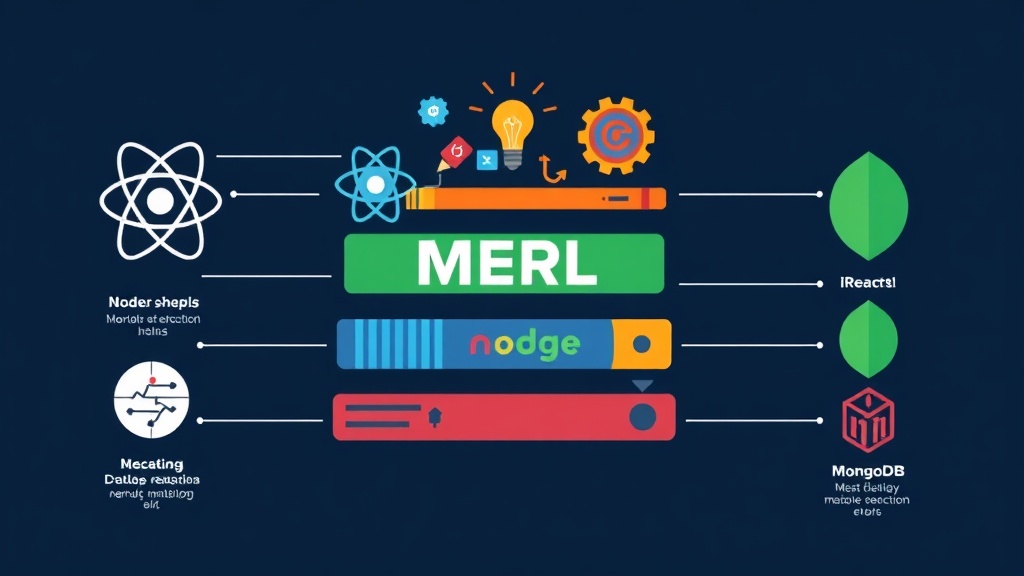
The MERN Stack Dominates India in 2026 — Here Is Why
Vikram had been studying coding for eight months. During that time, he had done HTML, CSS, and half a JavaScript course before getting distracted by an Angular tutorial, then a Vue video, then someone on Twitter told him to learn SvelteKit.
As a result, he had learned a little of everything and was not job-ready for anything.
Here is the cleaner path: pick the MERN stack, learn it end-to-end, build one real project, get hired. Everything else, at this stage, is simply noise.

The Full-Stack Developer Roadmap (In Exact Order)
Month 1: HTML, CSS, and JavaScript Foundations
HTML and CSS are fast — in fact, you can be productive in just 3-4 weeks. JavaScript, however, is where most beginners stall. Therefore, do not rush JavaScript. Instead, spend real time on: DOM manipulation, events, promises, async/await, the fetch API, and ES6+ features. Ultimately, JavaScript is the foundation everything else is built on.
Focus on this: By the end of Month 1, you should be able to build a to-do list app with local storage, a weather app using a public API, and a responsive page layout without looking anything up.
Months 2-4: React (Frontend)
React is the dominant frontend library in India — specifically, 60-70% of frontend and full-stack job postings require it. As a result, you should learn: components, props, state, React hooks (useState, useEffect, useContext, useRef), React Router, and state management with Context API or Zustand.
Build a multi-page SPA. Meanwhile, a common beginner mistake is building 10 tiny components. Instead, build one real app that has routing, data fetching, forms, and error states.
Months 4-6: Node.js + Express + Database (Backend)
Node.js lets you use JavaScript on the backend — which means, consequently, you are using one language for the entire stack. First, build REST APIs with Express. Then, learn middleware, authentication with JWT tokens, and file uploads with Multer. Finally, connect to MongoDB (using Mongoose) or PostgreSQL (using Prisma or pg).
Free 2026 Career Roadmap PDF
The exact SQL + Python + Power BI path our students use to land Rs. 8-15 LPA data roles. Free download.
TypeScript is no longer optional for mid and senior full-stack roles in India. In fact, it has become a baseline expectation at most product companies and funded startups. Therefore, start applying TypeScript to your React components and Express routes as early as possible. Specifically, focus on type annotations, interfaces, and the most common generics. Once you have a solid JavaScript foundation, this transition typically takes just 3-4 weeks. In other words, the sooner you start, the faster it becomes second nature.
Full-Stack Tech Stack Comparison: India 2026
| Stack | Job Demand (India) | Salary Range | Verdict |
|---|---|---|---|
| MERN (MongoDB, Express, React, Node) | 42% of postings | Rs. 6-25 LPA | Top choice |
| MEAN (MongoDB, Express, Angular, Node) | 20% of postings | Rs. 6-22 LPA | Enterprise/govt focus |
| Next.js + Prisma + PostgreSQL | Rising fast | Rs. 8-30 LPA | Great after MERN |
| Python Django/FastAPI + React | 15% of postings | Rs. 7-25 LPA | Good if Python-first |
Here’s the expanded case study with subheadings, transition words, and additional sentences naturally woven in:
Case Study: How Sneha Went From a Non-CS Background to a Full-Stack Job in Just 8 Months
The Starting Point: An Unlikely Beginning Sneha had a B.Com degree and had spent several years working in accounting. At first glance, a career in software development seemed completely out of reach. However, she was determined to make the transition and, as a result, joined GrowAI’s Full Stack program in April with zero prior coding experience. Despite the challenges ahead, she committed fully from day one.
The Foundation Phase: Getting JavaScript Right Before Moving On Rather than rushing into frameworks, Sneha deliberately spent the first three months on JavaScript fundamentals — really nailing async programming and the DOM before touching anything else. Specifically, she focused on promises, async/await, the fetch API, and ES6+ features until they felt completely natural. As a result, by the time she eventually moved on to React, she had a rock-solid foundation that most beginners simply skip over. In hindsight, this patient approach made everything that followed significantly easier and faster.
The Build Phase: One Real Project Instead of Ten Tiny Ones By month 4, Sneha had transitioned into React and, shortly after, into Node.js and backend development. Instead of building multiple small practice projects, she focused all of her energy on a single, meaningful application. Specifically, by month 6, she had built a fully functional job board application with user login, post creation, and application tracking — features that real hiring managers actually look for. Furthermore, she deployed it on Vercel with a custom domain, making it immediately accessible and demonstrably professional to anyone reviewing her portfolio.
The Portfolio Phase: Turning Work Into Opportunities With a live, working project in hand, Sneha next turned her attention to presenting her work effectively. She wrote a clear README, documented her technical decisions, and made sure her GitHub profile told a coherent story. As a result, her portfolio stood out not just because of what she built, but because of how clearly she communicated her thinking and process. In addition, she prepared thoroughly for technical interviews by revisiting core JavaScript concepts and practicing common React and Node.js interview questions.
The Application Phase: Playing a Numbers Game the Smart Way In October, Sneha applied to 40 companies with a targeted and deliberate strategy. Rather than applying randomly, she focused specifically on early-stage startups and mid-sized product companies in Hyderabad and Bangalore that were known to value skills over degrees. Consequently, out of 40 applications, she received 12 interview calls — a conversion rate that reflected both the quality of her portfolio and the precision of her targeting. In other words, she worked smart, not just hard.
The Outcome: A Real Job, Real Salary, Real Validation Finally, in December — just 8 months after starting with no coding background whatsoever — Sneha joined a Hyderabad-based SaaS startup as a Junior Full-Stack Developer at Rs. 7.5 LPA. For someone who had been working in accounting just months earlier, this was, without doubt, a life-changing outcome. More importantly, however, her story proves that with the right structured path, genuine consistency, and a willingness to go deep rather than wide, a non-CS background is simply not a barrier to breaking into full-stack development in India in 2026.
The Key Takeaway: What Made Sneha’s Journey Different Looking back, several things set Sneha apart from others who attempt the same transition and stall. First, she resisted the temptation to jump between frameworks and instead went deep on JavaScript before moving forward. Second, she built one real, deployable project rather than collecting certificates. Third and finally, she treated her job search as seriously as her learning — applying strategically, preparing thoroughly, and following up consistently. As a result, what might have taken others two or three years was accomplished in just eight focused months.
rney
GrowAI’s Full Stack program covers MERN + TypeScript with real project-based learning and placement support for Indian professionals.
Frequently Asked Questions
I want to become a full-stack developer. Where should I begin?
Start with HTML and CSS fundamentals (3-4 weeks), then move on to JavaScript core concepts (4-6 weeks). Next, learn React for frontend (8-10 weeks), then progress to Node.js and Express for backend APIs (6-8 weeks). After that, add SQL/MongoDB for databases, and finally learn deployment (Vercel, AWS EC2). Before applying, complete one full production project with authentication, database, and deployment. Notably, in India in 2026, the MERN stack (MongoDB, Express, React, Node) appears in 42% of full-stack job postings.
How long does it take to become a full-stack developer in India?
Most people become job-ready as junior full-stack developers in 6-9 months with consistent daily study of 3-4 hours. Specifically, the first 3 months cover HTML/CSS/JavaScript. Subsequently, Months 3-6 cover React and Node.js. From Month 6 onwards, the focus shifts to building real projects and applying for jobs.
What is the best tech stack for full-stack development in India in 2026?
The MERN stack (MongoDB, Express.js, React, Node.js) is the most in-demand full-stack combination in India in 2026, appearing in 42% of relevant job postings. Furthermore, TypeScript knowledge alongside MERN is increasingly required for mid and senior roles. In addition, Next.js (React-based) is also rising quickly for SSR applications.
Do I need a computer science degree to become a full-stack developer in India?
No, you do not need a CS degree to become a full-stack developer in India. In fact, hiring in Indian product companies and startups is heavily portfolio and project-based. As a result, a strong GitHub profile with 3-4 real projects demonstrates skills better than a degree in many cases. For example, multiple GrowAI graduates without CS backgrounds have successfully secured full-stack roles at 6-9 LPA.
What is the salary for a fresher full-stack developer in India in 2026?
Fresher full-stack developers in India earn Rs. 5-7 LPA on average in 2026. However, developers with strong project portfolios and TypeScript skills can command Rs. 7-10 LPA. Moreover, after 2-3 years of experience, full-stack salaries in product companies reach Rs. 15-25 LPA.
Should I learn React or Angular or Vue for frontend in 2026?
Learn React. In India’s 2026 job market, React clearly dominates frontend job requirements — it appears in 60-70% of frontend and full-stack postings. On the other hand, Angular is used primarily in enterprise and government projects. Meanwhile, Vue has a small but loyal following. Therefore, for maximum job opportunities in India, React is the clear choice.
What projects should I build to get a full-stack developer job?
Build at least one full production project with: user authentication (JWT or OAuth), a real database (PostgreSQL or MongoDB), a REST or GraphQL API, and deployment on a live domain. For instance, good project ideas include an e-commerce site with cart and checkout, a job board application, or a project management tool. Most importantly, the project must be live and accessible, not just on localhost.
Is TypeScript necessary for full-stack development in India?
TypeScript is increasingly required for full-stack roles in India in 2026, especially at product companies and funded startups. In particular, it is listed as required in over 50% of senior full-stack job postings and strongly preferred in mid-level roles. As a result, start with JavaScript, then add TypeScript after 2-3 months of JavaScript practice.
Ready to start your career in data?
Book a free 1-on-1 counselling session with GrowAI. Personalised roadmap, zero pressure.