

Figma AI Features 2026: The Complete Guide for UI/UX Designers and Developers
AutoGPT, AgentGPT, and AI Agent Platforms in 2026: What’s Actually Production-Ready?
Back in 2023, AutoGPT went viral with the promise of AI agents that could complete complex tasks autonomously. Almost immediately, thousands of developers deployed it and, as a result, discovered the same thing: it was impressive in demos and yet deeply unreliable in production. Specifically, it would hallucinate steps, loop indefinitely, and frequently get stuck or go in completely wrong directions.
Three years later, however, the AI agent landscape has matured significantly. For instance, some early projects have since evolved into genuinely useful tools. In addition, new frameworks have emerged that directly address the reliability problems that once plagued the space. Consequently, a much clearer picture has finally emerged of what AI agents can actually do in production versus what is still firmly in research territory.
Therefore, this guide cuts through the hype with a current-state assessment of the major agent platforms and frameworks — so that you can make informed decisions rather than chase demos.
TL;DR
- AutoGPT in its original fully-autonomous form is still unreliable for production. Use it for experiments, not mission-critical tasks.
- LangGraph and CrewAI are the most production-ready frameworks in 2026 for building custom agents.
- Fully autonomous agents remain fragile; human-in-the-loop agents with defined decision points are much more reliable.
- For non-developers: AgentGPT and similar no-code platforms are improving but still best for structured, low-stakes tasks.
- The frontier: multi-agent collaboration (one agent orchestrating specialized sub-agents) is showing strong results in EdTech and content automation.
The Agent Platform Landscape in 2026
| Platform/Framework | Type | Best For | Production Readiness | Cost |
|---|---|---|---|---|
| LangGraph | Dev framework | Custom stateful agents for developers | High — used in production by major companies | Free (pays for LLM API) |
| CrewAI | Dev framework | Multi-agent workflows with defined roles | Medium-High — active development | Free (pays for LLM API) |
| AutoGen (Microsoft) | Dev framework | Conversational multi-agent experiments | Medium — good for research/experiments | Free (pays for LLM API) |
| AgentGPT / Godmode | No-code platform | Simple research and task execution | Low — inconsistent results | Freemium |
| OpenAI Assistants API | Managed platform | Document QA, code execution, tool calling | High — managed by OpenAI | $0.03-0.06/1k tokens |
| AutoGPT Platform | No-code + dev | Agent creation with GUI | Medium — improved significantly | Freemium + cloud hosting |
Here’s the updated content with even more transition words naturally woven in:
What Changed: Here is Exactly Why Agents Are Finally More Reliable in 2026
Better Underlying Models: The Foundation Has Shifted First and foremost, GPT-4o, Claude 3.5 Sonnet, and Gemini 2.0 Pro are significantly better at following instructions, staying on task, and recognizing when they’re stuck than their predecessors ever were. Moreover, they handle ambiguous instructions far more gracefully than before. As a result, the same agent architecture that failed consistently in 2023 now often works reliably and predictably with 2026 models. In short, the models themselves have done much of the heavy lifting.
Structured Output: A Simple Fix With Enormous Impact In addition to better models, modern LLM APIs now support forcing structured JSON output directly from the model. This means that, instead of simply hoping the model correctly formats its output for the next step, you can now guarantee the schema every single time without exception. Consequently, this single improvement alone has resolved a huge category of agent failures that previously made production deployment nearly impossible. In other words, reliability no longer depends entirely on the model’s formatting judgment.
Human-in-the-Loop Patterns: Accepting Reality and Moving Forward Furthermore, the field has largely and wisely accepted that fully autonomous agents are still too unreliable for truly important tasks. Therefore, the winning pattern today is “agentic” — specifically, the AI does most of the work and generates a recommended action, but a human still approves before the action is actually taken. This is especially critical for actions with real-world consequences, such as sending emails, executing code, or making API calls. As a result, teams that adopt this pattern ship faster while still maintaining full control.
Better Observability: Finally, You Can See What’s Happening Finally, and perhaps most practically, tools like LangSmith and Langfuse now provide detailed traces of every single step an agent takes throughout its entire execution. As a result, when something inevitably goes wrong, you can see exactly where and precisely why it failed. In turn, this has made debugging and continuously improving agents much faster and far less frustrating than before. Ultimately, better observability has transformed agent development from guesswork into a structured, repeatable engineering process.
🔎
The most reliable agent pattern I’ve seen in production EdTech: a ‘recommender agent’ that analyzes student data and recommends an action (call this student, send this resource, flag for academic support), but a human decides whether to take the action. The agent adds intelligence; the human retains control. This pattern has far fewer failures than fully autonomous alternatives.
Free 2026 Career Roadmap PDF
The exact SQL + Python + Power BI path our students use to land Rs. 8-15 LPA data roles. Free download.
Building Your First Real Agent with CrewAI
CrewAI is approachable for developers without deep ML backgrounds. The core concept: you define Agents (with roles, goals, and tools) and Tasks (with descriptions and expected output), then create a Crew that coordinates them.
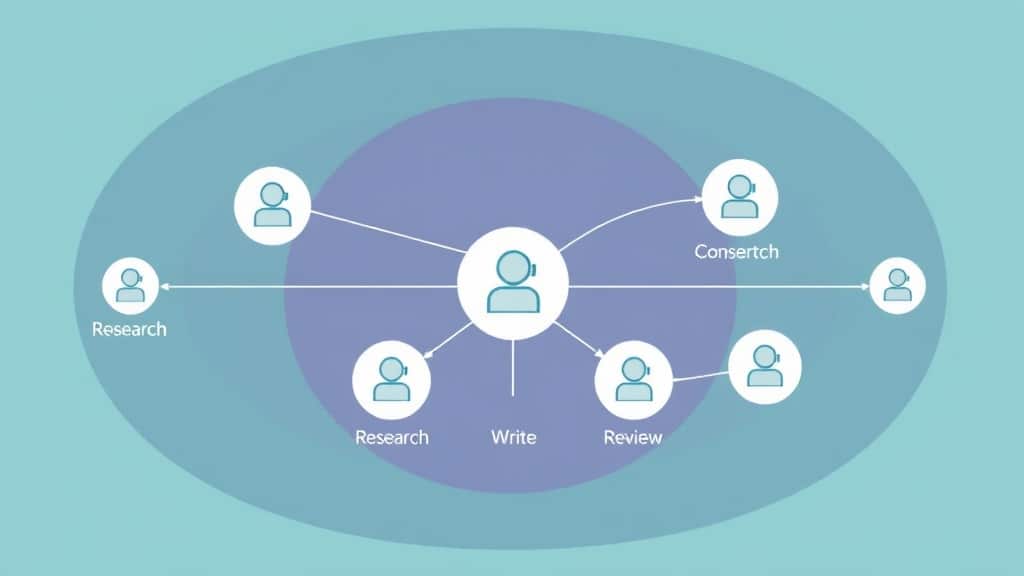
A simple content research crew might have three agents:
- Research Agent — role: “Senior Research Analyst”, goal: “Find factual, current information on the given topic”, tools: web search, Wikipedia API
- Writer Agent — role: “Content Writer”, goal: “Write engaging, accurate content based on research findings”, tools: none (works from research output)
- Editor Agent — role: “Quality Editor”, goal: “Review and improve the content for accuracy, clarity, and completeness”, tools: none
Each agent is powered by an LLM (Claude or GPT-4o). They run sequentially, passing output between them. The full pipeline — from “write an article about X” to a draft ready for human review — runs in 3–5 minutes.
EdTech Agent Use Cases That Are Production-Ready
Quiz generation pipeline: Input: course content PDF. Agent workflow: extract key concepts → generate questions at multiple difficulty levels → create answer options → validate questions for accuracy and ambiguity → output structured quiz JSON. Works reliably with GPT-4o and human spot-checking.
Student progress narrative: Input: student performance data (quiz scores, completion rates, time-on-task). Agent: analyzes patterns, identifies specific strengths and gaps, generates personalized narrative summary and 3 specific recommended next steps. Better than templated feedback for student engagement.
Content gap identifier: Input: course curriculum outline + recent student question logs. Agent: analyzes questions that don’t map to existing content, clusters by topic, recommends new content additions in priority order. Saves curriculum team 8–10 hours of manual analysis per quarter.
Here’s the updated content with more transition words naturally woven in:
Common Mistakes to Avoid When Building AI Agents
1. Trusting agents with high-stakes actions without human review — First and foremost, agents make mistakes that compound quickly over time. Therefore, never build an agent that sends bulk emails, modifies databases, or makes financial transactions without explicit human approval for each and every action. In short, the higher the stakes, the more essential human oversight becomes.
2. Not adding max iteration limits — In addition, agents can and do loop indefinitely when left unchecked. As a result, always define a maximum number of steps and a graceful exit condition before deploying. Otherwise, without this safeguard in place, you’ll inevitably face runaway API costs and deeply confused users wondering why nothing is working.
3. Choosing complex agent architectures for simple tasks — Furthermore, a 3-agent pipeline to write a blog post is almost always worse than a single well-prompted LLM call with a good system prompt. Consequently, reserve multi-agent complexity only for genuinely complex workflows that simply cannot be resolved with a single chain. In other words, always start simple and only add complexity when the task truly demands it.
Frequently Asked Questions
Is AutoGPT actually useful in 2026?
AutoGPT has, in fact, evolved significantly since its viral debut. Specifically, the latest version — the AutoGPT Platform — is far more structured and reliable than the original ever was. For developers, however, LangGraph and CrewAI still offer considerably more control and flexibility. For non-developers, on the other hand, AutoGPT Platform and similar tools work reasonably well for well-defined, low-stakes tasks like research collection and document summarization. That said, it is still not production-ready for autonomous high-stakes workflows.
How much does running AI agents cost?
The cost, ultimately, depends heavily on both the LLM and your usage patterns. For instance, a simple research agent using GPT-4o might cost anywhere between $0.05 and $0.30 per run. A complex multi-turn agent running many iterations, however, could cost anywhere from $1 to $5 per run. Therefore, multiply by your daily volume to accurately estimate monthly costs. Additionally, using Llama 4 or Claude Haiku for non-critical steps can, as a result, reduce costs by as much as 10–20x.
Do I need to know programming to build AI agents?
The answer, in short, depends entirely on which tools you choose. For instance, LangGraph and CrewAI both require Python programming knowledge. For no-code platforms like AutoGPT Platform, AgentGPT, and Make.com’s AI modules, however, no programming is needed at all — although you are consequently limited to the platforms’ built-in capabilities. Therefore, for anything production-critical, developer frameworks ultimately provide the level of control and observability you genuinely need.
Ready to fast-track your career?
Learn AI agent development and LLMOps in GrowAI’s AI Engineering program. Book a free demo.
Ready to start your career in data?
Book a free 1-on-1 counselling session with GrowAI. Personalised roadmap, zero pressure.