

Data Analytics Course Syllabus: What you will learn in 2026

March 18, 2026
डेटा एनालिटिक्स कोर्स सिलेबस

The data analytics course syllabus at GROWAI is built around what employers actually hire for in 2026. Companies across every industry — from healthcare to e-commerce — are hiring professionals who can turn raw data into meaningful insights.

The demand for skilled data analysts has never been higher. If you are wondering what a modern data analytics course covers and which skills will get you hired, this complete syllabus guide will answer every question.

Why Enroll in a Data Analytics Course in 2026?

Data is growing faster than ever. Every time someone shops online, streams a video, or books a flight, data is being generated. Businesses need people who can make sense of this data and that is exactly what a data analyst does.

Here is why 2026 is the best time to start your data analyst training:

  • The global data analytics market is projected to exceed $550 billion by 2028.
  • Data analyst roles are among the top 10 fastest-growing jobs worldwide.
  • Average salaries for certified data analysts range from $70,000 to $120,000 per year in the US.
  • Data analyst certification online programs have made this career accessible to anyone, anywhere.
  • Companies prefer candidates who have completed a structured data analytics course with hands-on projects.

The Complete Data Analytics Course Syllabus for 2026

A well-designed data analyst course syllabus typically spans 2 to 3 months. It covers everything from foundational concepts to advanced analytics and real-world projects. Below is a detailed breakdown of what you will learn  module by module.

Module 1: Introduction to Data Analytics

Every great data analytics course starts with the basics. Before you dive into tools and code, you need to understand what data analytics actually is and why it matters.

Topics covered in this module:

  • What is data analytics and its types (descriptive, diagnostic, predictive, prescriptive)
  • The role of a data analyst in different industries
  • Key tools used in data analytics: Excel, SQL, Python, Tableau
  • Understanding data types and data sources
  • Introduction to the data analytics lifecycle

Excel remains one of the most widely used tools in the world for data analysis. Even if you already use Excel, a structured data analyst training program will take your skills to a professional level.

  • Advanced Excel formulas: VLOOKUP, HLOOKUP, INDEX-MATCH, IF, COUNTIFS
  • Pivot Tables and Pivot Charts for summarizing data
  • Data cleaning techniques in Excel
  • Creating dashboards and reports in Excel
  • Power Query for data transformation

SQL (Structured Query Language) is the backbone of data analytics. Every data analyst course syllabus must include SQL because it is how you extract, filter, and manipulate data stored in databases.

  • SQL fundamentals: SELECT, FROM, WHERE, GROUP BY, ORDER BY
  • Joins: INNER JOIN, LEFT JOIN, RIGHT JOIN, FULL OUTER JOIN
  • Subqueries and nested queries
  • Window functions: ROW_NUMBER, RANK, LEAD, LAG
  • Working with real databases: MySQL, PostgreSQL, BigQuery

Writing optimized queries for large datasets

Python is the most popular programming language among data analysts and scientists. In this module, you will go from beginner to confident Python user  specifically for data analytics tasks.

  • Python basics: variables, loops, functions, and libraries
  • NumPy for numerical computing
  • Pandas for data manipulation and cleaning
  • Data wrangling: handling missing values, duplicates, and outliers
  • Exploratory Data Analysis (EDA) with Python
  • Automating repetitive data tasks with Python scripts

Being able to analyze data is only half the job. A great data analyst also knows how to present findings in a way that non-technical stakeholders can understand. This is where data visualization comes in.

  • Principles of effective data visualization
  • Matplotlib and Seaborn for charts and graphs in Python
  • Tableau: building interactive dashboards without code
  • Power BI: Microsoft’s data visualization platform
  • Choosing the right chart type for your data
  • Building executive-level dashboards and reports

You do not need a math degree to understand statistics for data analytics. However, a solid grasp of key statistical concepts will make you a much stronger analyst.

  • Descriptive statistics: mean, median, mode, standard deviation
  • Probability theory and distributions
  • Hypothesis testing and p-values
  • Correlation vs. causation
  • Regression analysis: simple and multiple linear regression
  • A/B testing fundamentals

In 2026, a strong data analytics course syllabus goes beyond traditional analysis. Machine learning concepts are now expected of senior data analysts  especially for predictive analytics.

  • What is machine learning and how it differs from traditional analysis
  • Supervised vs. unsupervised learning
  • Linear and logistic regression models
  • Decision trees and random forests
  • Clustering techniques: K-Means clustering
  • Model evaluation: accuracy, precision, recall, F1-score

Using Scikit-learn in Python for ML models

Business Intelligence (BI) connects data analytics to real business decisions. This module teaches you how to use BI tools used by top companies every day.

  • Introduction to Business Intelligence (BI) concepts
  • Deep dive into Power BI: data modeling, DAX formulas, report building
  • Google Looker Studio for web analytics reporting
  • Connecting BI tools to databases and spreadsheets
  • KPI tracking and performance dashboards
  • Real-world BI case studies from retail, finance, and healthcare

Theory is important, but employers hire based on what you can do. The capstone project module gives you the chance to apply everything you have learned in a real-world scenario.

  • End-to-end data analytics project from scratch
  • Collecting, cleaning, analyzing, and visualizing a real dataset
  • Presenting insights to a simulated business stakeholder
  • Building a professional portfolio on GitHub or a personal website
  • Preparing for job interviews: common data analyst interview questions
  • Resume and LinkedIn profile optimization for data analyst roles

Data Analytics Certification: Which One Should You Get in 2026?

A data analytics certification validates your skills to employers. It shows that you have completed structured data analyst training and can perform the job. Here are the most recognized certifications in 2026:

Top Data Analytics Certifications to Pursue

डेटा एनालिटिक्स कोर्स सर्टिफिकेट
Google Data Analytics Certificate

Offered on Coursera, this is a beginner-friendly data analyst certification online. It covers the full analytics workflow and is recognized by top employers globally.
डेटा एनालिटिक्स कोर्स सर्टिफिकेट
IBM Data Analyst Professional Certificate

A comprehensive program covering Python, SQL, Excel, and Cognos Analytics. Great for those looking for a structured data analyst training path online.
डेटा एनालिटिक्स कोर्स सर्टिफिकेट
Microsoft Power BI Data Analyst (PL-300)

Ideal if you want to specialize in Power BI and business intelligence reporting. Highly valued in corporate environments.
डेटा एनालिटिक्स कोर्स सर्टिफिकेट
Tableau Desktop Specialist

A certification focused on data visualization using Tableau is one of the most in-demand skills in the data analytics job market.
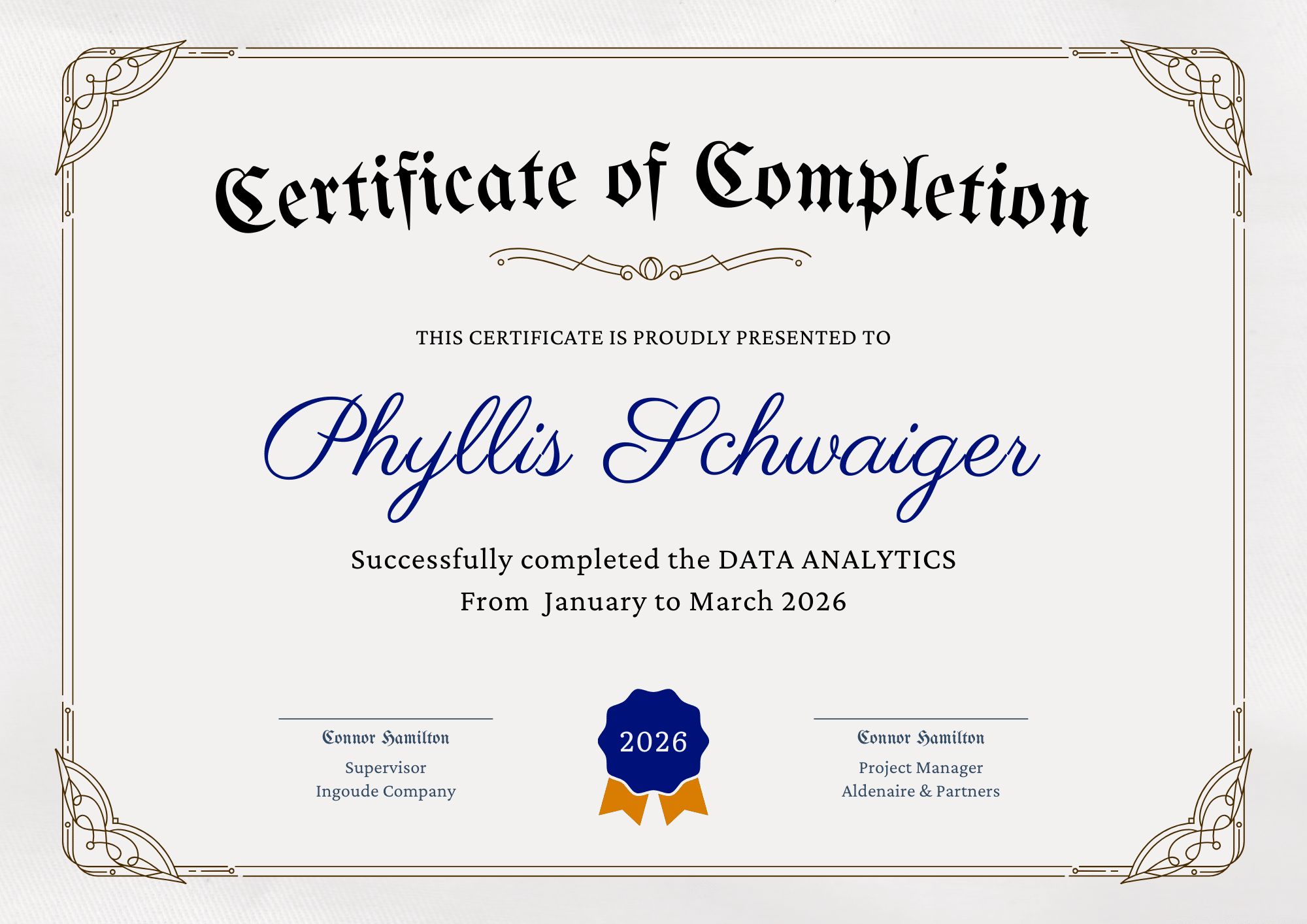
डेटा एनालिटिक्स कोर्स सर्टिफिकेट
Master in Data Analytics (University Programs)

For those who want academic credentials, a master in data analytics degree offers deep theoretical and practical knowledge. Many universities now offer online options


Why settle for just a certificate when you can gain mastery?

Land your first data analytics job or level up fast. GROWAI offers India’s most practical data analytics certification — 3 months, industry mentors, real projects, and 100% placement support. Don’t just earn a certificate — build a career.

Key Skills You Will Gain as a Data Analyst

After completing a data analytics course, you will be equipped with both technical and soft skills that employers are actively looking for:

Technical Skills

Soft Skills

  • SQL query writing and database management
  • Python programming (Pandas, NumPy, Matplotlib)
  • Data visualization using Tableau and Power BI
  • Statistical analysis and hypothesis testing
  • Machine learning fundamentals
  • Excel and Google Sheets (advanced level)
  • Critical thinking and problem-solving
  • Business acumen and understanding of KPIs
  • Clear communication of complex insights
  • Attention to detail
  • Ability to ask the right questions from data
  • Teamwork and stakeholder management

Who Should Enroll in a Data Analytics Course?

The great thing about data analytics is that it is open to people from all backgrounds. Whether you studied arts, commerce, or science, if you are curious about data, you can become a data analyst.

  • Fresh graduates looking to start a tech career
  • Working professionals who want to switch to a data-driven role
  • Business owners who want to use data for better decision-making
  • Marketing and finance professionals looking to add analytics to their skillset

IT professionals wanting to move into data analytics or data science

Data Analyst Certification Online vs. Classroom Training:

Which is Better?

In 2026, most learners opt for data analyst certification online programs because of the flexibility they offer. However, both modes have their strengths.

Advantages of Online Data Analytics Training
Advantages of Classroom Data Analytics Training
  • Learn at your own pace, from anywhere in the world
  • More affordable than traditional classroom programs
  • Access to recorded sessions, live doubt-solving, and forums
  • Recognized certifications from Google, IBM, Microsoft, and more
  • Ideal for working professionals who cannot attend classes regularly
  • Structured schedule helps with discipline
  • Face-to-face interaction with instructors and peers
  • Immediate feedback on assignments and projects
  • Better networking opportunities with batchmates

Career Paths After Completing Your Data Analytics Course

After completing your data analyst training and earning your data analytics certification, a wide range of career paths open up. Here are the most popular roles in 2026:

Top Data Analyst Job Roles and Salaries in 2026

  • Data Analyst: ₹6L – ₹18L/year
  • Business Intelligence Analyst: ₹7L – ₹16L/year
  • Marketing Analyst: ₹4L – ₹12L/year
  • Financial Data Analyst: ₹8L – ₹15L/year
  • Data Science Analyst: ₹8L – ₹17L/year
  • Product Analyst: ₹8L – ₹20L/year

Frequently Asked Questions (FAQ)

Q1. How long does a data analytics course take?

Most data analytics courses take between 2 to 6 months, depending on the depth and format. Short certification programs can be completed in 8–12 weeks, while a comprehensive data analytics course syllabus with projects may take 5–6 months. A master in data analytics degree typically takes 1–2 years.

Q2. Do I need a coding background to become a data analyst?

No, you do not need prior coding experience to start a data analyst course. Most programs are designed for beginners and start from scratch. You will learn Python and SQL step by step. What matters most is logical thinking and curiosity about data.

Q3. Can I get a data analyst job after completing an online course?

Yes! Many people have landed their first data analyst jobs after completing data analyst certification online programs. The key is to build a strong portfolio of projects, earn recognized certifications, and apply consistently. Many course providers also offer career support, job placement assistance, and interview preparation as part of their data analyst training programs.

Your Data Analytics Journey Starts Here

Data analytics is one of the most rewarding and future-proof careers you can choose in 2026. The data analyst course syllabus we have outlined above is designed to take you from zero to job-ready  covering everything from Excel and SQL to Python, machine learning, and business intelligence.

Whether you choose a short data analytics certification online, a comprehensive data analyst training program, or a full master in data analytics degree  the most important thing is to start. The skills you gain will open doors across every industry.

Do not wait for the “perfect” time. The perfect time to start your data analytics journey is right now.

🎓 Ready to Start Your Data Analytics Journey?

Join thousands of learners who have transformed their careers with our industry-leading data analytics course. Learn from expert instructors, work on real-world projects, and earn a globally recognized data analytics certification.

Leave a Comment